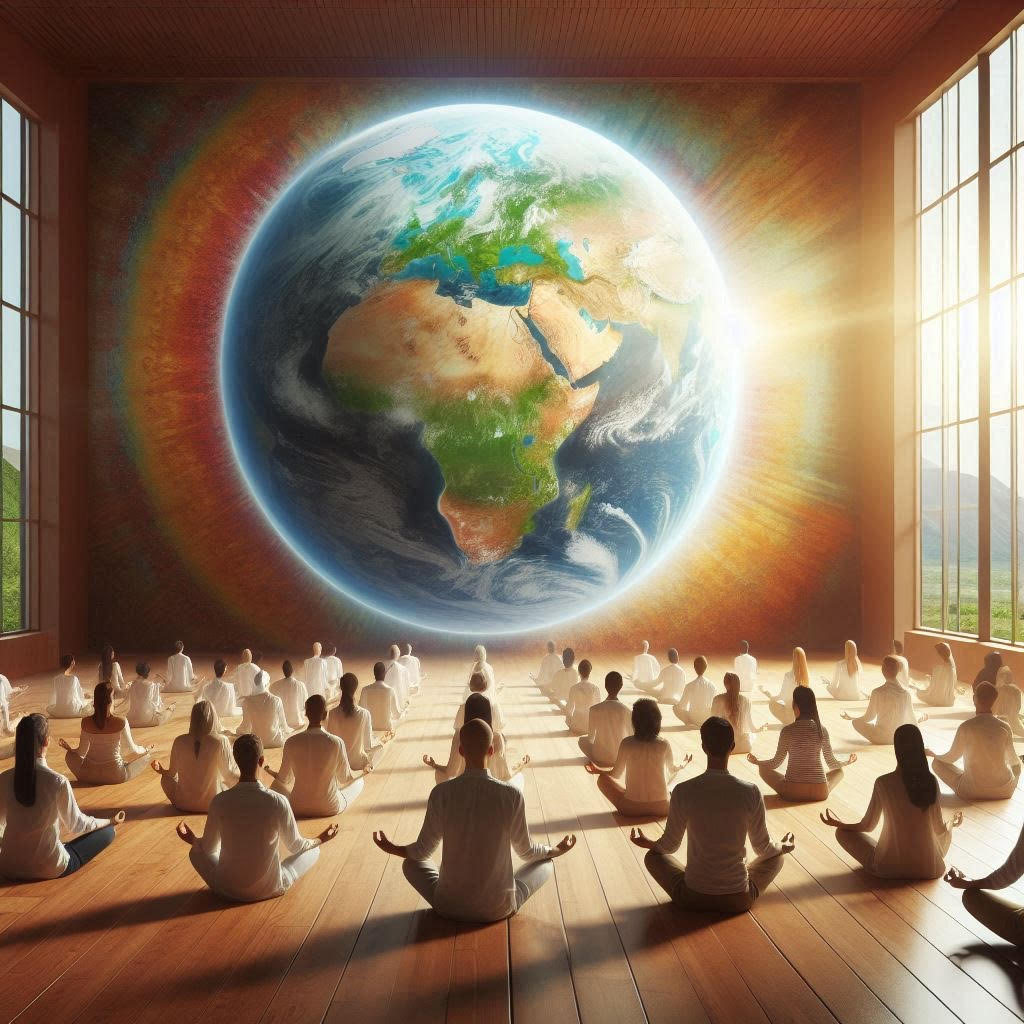
A Global Initiative for Peace
While some parts of the world are at war and facing crises, the second World Meditation Day quietly took place at the United Nations (UN) headquarters in New York on December 21, 2025. This event was initiated by a resolution passed by the United Nations General Assembly on November 29, 2024, introduced by Liechtenstein and co-sponsored by the following nations: Andorra, Bangladesh, Bulgaria, Burundi, Dominican Republic, Iceland, India, Luxembourg, Mauritius, Mexico, Monaco, Mongolia, Morocco, Nepal, Portugal, Slovenia and Sri Lanka. At a time when some countries within the UN are at war with each other, such an initiative brings back hope and serves as a reminder to its members of the organization’s very purpose: nations united to maintain peace on a global scale.
On the occasion of the first “World Meditation Day,” the Permanent Missions of Liechtenstein, Andorra, Mexico, Nepal, India, and Sri Lanka organized a celebratory event titled Meditation – its universality and relevance in the 21st century, with keynote speakers Dr. Tony Nader and Gurudev Sri Sri Ravi Shankar, emphasizing the benefits and necessity of meditation for humanity today. The goal of this event was to “raise awareness about meditation and its benefits, recalling the right of everyone to the enjoyment of the highest attainable standard of physical and mental health.”
Meditation at the UN: A Historical Perspective
The idea of practicing meditation to cultivate peace and unity at the UN is not new. In 1952, a Meditation Room dedicated to silence and introspection was established as a meaningful tool to achieve global harmony before the different kinds of crises, conflicts, and wars that the UN could face. The proclamation of the World Meditation Day is a reminder of this idea and underscores “the importance of nurturing human consciousness to address these issues and create harmony within ourselves and our communities.”
Meditation is a millennial tool used in different forms in all cultures across space and time for self-inquiry, spiritual quests, or overall well-being. Traditionally thought of as an individual practice or in small groups, it has recently become more widely applied in Western countries. A notable example is Jon Kabat-Zinn’s mindfulness meditation, implemented on a large scale in the United States by the Center for Mindfulness through mindfulness-based stress reduction programs in prisons.
Collective Meditation and the Maharishi Effect
Meditation can also be collective and shared on a broad scale. The First World Meditation Day is a prime example of large-scale meditation fostering peace, though it is far from the first. In 1993, over 4,000 practitioners of transcendental meditation gathered in Washington, D.C., for six weeks to lower the crime rate. This scientific experiment demonstrated a 23% reduction in crime, along with improvements in quality of life, including fewer emergency psychiatric calls, hospital trauma cases, complaints about the police, and accidental deaths (Springer).
More recently, in December 2023, 10,000 meditators from 134 nations assembled near Hyderabad, India, practicing transcendental meditation for two weeks to activate the so-called “Maharishi Effect,” aiming to neutralize negative tendencies in society. Developed by Indian spiritual master Mahesh Maharishi Yogi, the practice suggests that if 1% of a population meditates, the quality of life improves noticeably. Scientific studies, including work by Dr. Tony Nader, have shown that the Maharishi Effect positively impacts social well-being, reducing crime and accidents while enhancing social and economic indicators.
Toward a More Peaceful World
In times of raging wars, growing polarization, and division within populations, having a global institution like the UN acknowledge the transformative power of meditation is highly encouraging. These millennial practices, combined with scientific validation, show promise in improving the well-being of communities and societies worldwide.
The World Meditation Day is just one step toward fostering peace and unity, demonstrating the potential of meditation to contribute meaningfully to global harmony.
Sources
- A Lotus in the Mud – 10,000 assemble in India to meditate for world peace
Effects of Group Practice of the Transcendental Meditation Program on Preventing Violent Crime in Washington, D.C.: Results of the National Demonstration Project, June-July 1993. - Springer – The National Demonstration Project on Transcendental Meditation
- Current Affairs – World Meditation Day 2024
- UMass Memorial Health – Center for Mindfulness
- United Nations – Meditation Day