
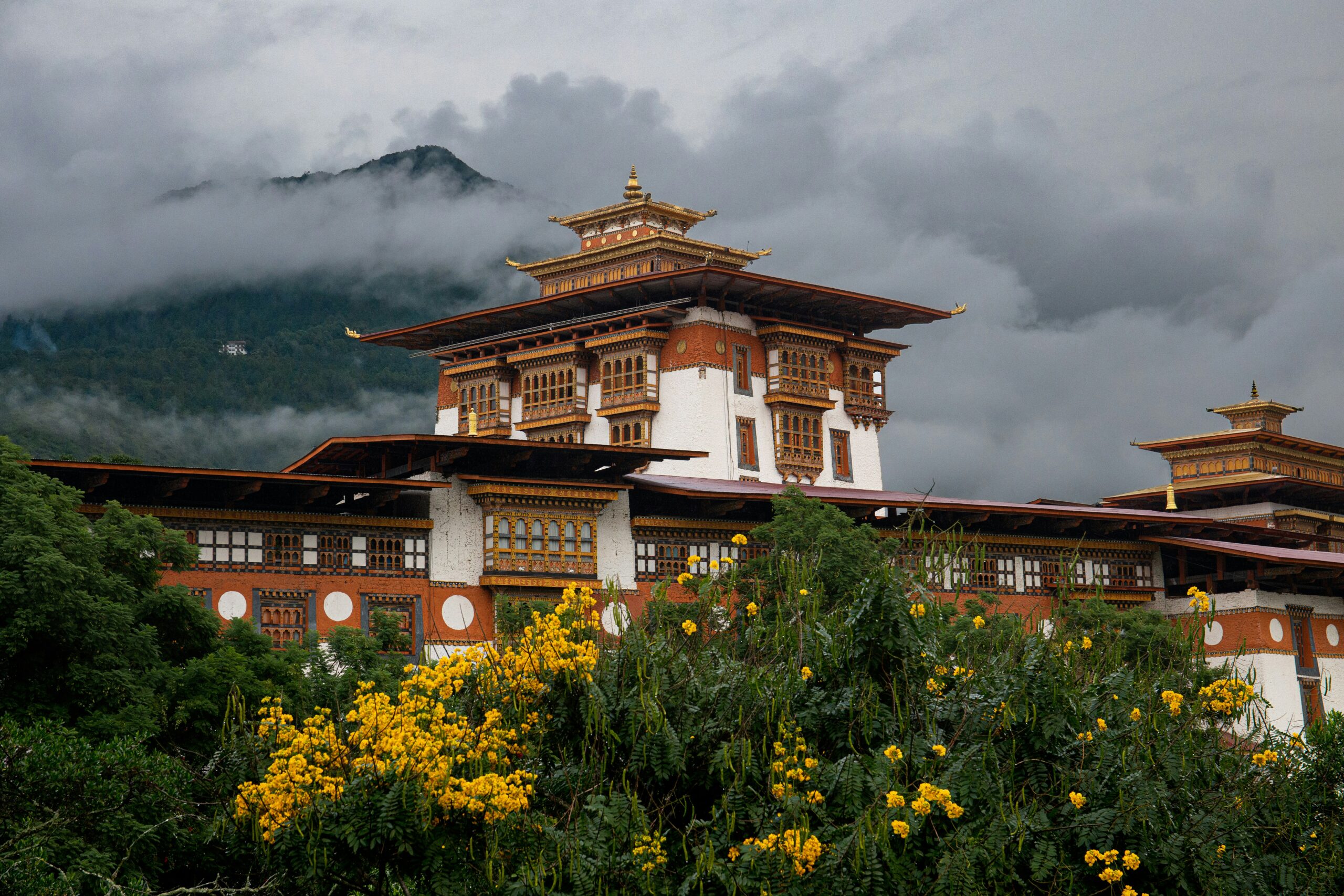
Bhutan is often called “the country of happiness.” This phrase captures curiosity as much as it inspires reflection. Tucked between India and China, this Himalayan kingdom has long measured progress not by GDP alone, but by collective well-being. Gross National Happiness has shaped governance, environmental stewardship, and cultural preservation for decades, embedding a philosophy of balance and compassion into the country’s way of development.
Now, Bhutan is testing whether this philosophy can shape not only policy, but an entire city. In the southern plains, Gelephu Mindfulness City (GMC) is emerging as both an economic gateway and a living experiment in conscious urban development. More than an urban district, it is a question posed to the world: can modernization unfold without eroding identity or sacrificing spiritual grounding or ecological resilience?
“The city will be a Mindfulness City, encompassing conscious and sustainable businesses, inspired by Buddhist spiritual heritage, and distinguished by the uniqueness of the Bhutanese identity,” stated Jigme Khesar Namgyel Wangchuck, the ruling King of Bhutan.
This article is the first in a two-part special feature exploring how GMC could become a living example for 21st-century urbanism, where tradition, environment, and innovation converge.
A Country Shaped by Harmony
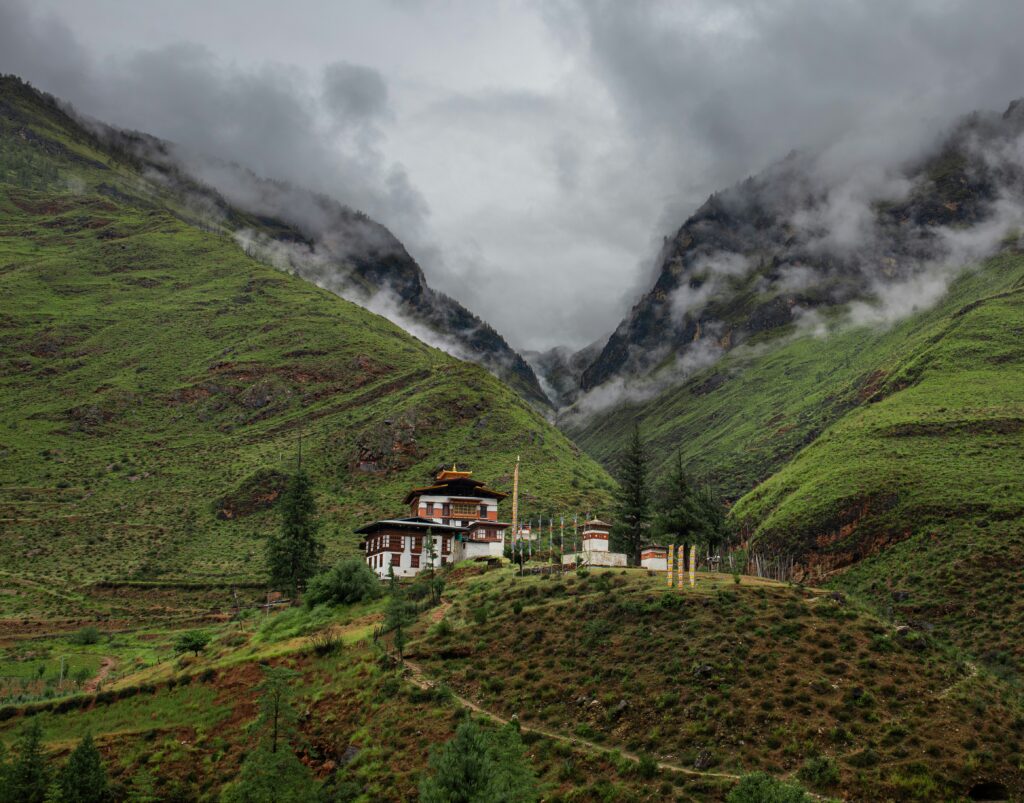
GMC cannot be understood apart from Bhutan itself. Forests cover over 70% of the kingdom, and its Constitution mandates that at least 60% must remain forested forever. It is the world’s first carbon-negative country and one of the last biodiversity hotspots on Earth.
Yet Bhutan’s distinction lies not only in its ecology. Vajrayana Buddhism and its precepts of compassion, wisdom, and interdependence have shaped its institutions, education, and civic life for centuries.
When Gross National Happiness was formalized in the 1970s, it reflected a society already attuned to achieving balance: development must respect harmony with nature, with each other, and within oneself.
To translate this philosophy into practice, the roadmap for Gelephu focuses on eight priority sectors: spirituality, health and wellness, education, green energy and technology, finance and digital assets, agri-tech and forestry, aviation and logistics, and tourism.
Architecture and Environment as Conscious Infrastructure
If governance provides the framework, architecture and urban planning give Gelephu its visible expression. The masterplan, led by the world-renowned architecture firm Bjarke Ingels Group (BIG) in partnership with GMC, received a 2025 Holcim Foundation for Sustainable Construction Award for its integrated approach to ecological resilience and cultural continuity.
Commenting on the project, BIG’s founder Bjarke Ingels said: “[The city] will be an invitation to the world to participate in the Bhutanese mindset, to learn, to teach and to share its values towards growing a more sustainable future.”
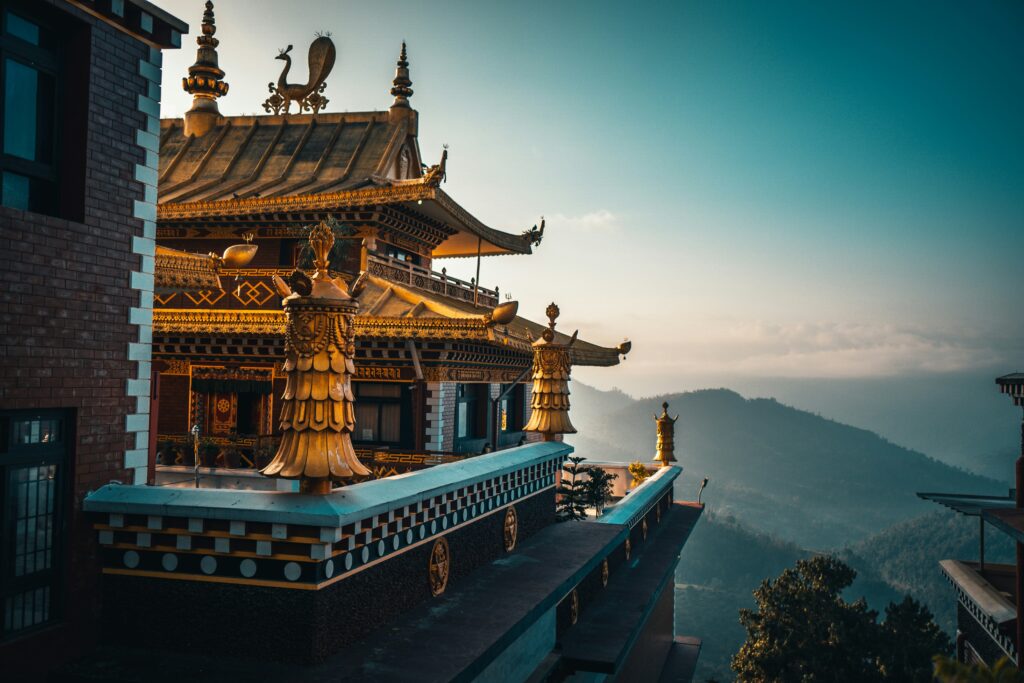
The design blends traditional craftsmanship and contemporary engineering. Wood, stone, and bamboo, deeply rooted in local culture, coexist with advanced infrastructure to create a city that is both grounded and forward-looking. Low-rise buildings preserve human scale and reduce reliance on carbon-intensive materials, while thirty-five rivers and streams shape neighborhoods, supporting biodiversity and functioning as natural flood management systems. Agriculture is woven into the city fabric, sustaining local livelihoods and linking ecological resilience to daily life.
Neighborhoods are organized around mandala principles, translating spiritual symbolism into spatial planning. Bridges and public spaces serve civic, educational, and spiritual functions, from greenhouses combining modern agro-tech with traditional practices to marketplaces showcasing Bhutanese craftsmanship. In every element, tradition informs innovation, creating architecture that is living, adaptive, and generative.
At the western edge, the Sankosh Temple-Dam merges hydroelectric infrastructure with pilgrimage space, an architectural expression of energy production intertwined with contemplation.
In Ingels’s words, “After centuries of perfecting a life of harmony with others and nature, Bhutan is now ready to show the world how to create a sustainable human presence on earth.”
A City Built from the Ground Up
What makes Gelephu Mindfulness City particularly remarkable is not only its philosophy, but its scale. Around the world, sustainable innovation often appears in fragments, a carbon-neutral building here, an eco-district there, a retrofitted transport strategy layered onto an already dense urban fabric. These efforts matter. But they operate within systems that were conceived under different assumptions.
Spanning approximately 1,000 square kilometers, GMC is being designed as an entirely new city with ecological resilience, spiritual symbolism, biodiversity integration, and human-scale urbanism woven into its structure. It shifts sustainability from an adjustment to an organizing principle.
And while the masterplan includes major civic structures, from the airport to the temple-dam, their purpose is not to dominate the skyline as visual trophies. The ambition is subtler and more profound. The architecture is meant to be felt as much as seen. It seeks to embody Bhutan’s respect for nature, spirituality and traditions not only through materials and form, but through the experience it offers to those who pass through its spaces.
Light, scale, landscape, craft, symbolism: these elements are composed to create places that invite reflection. The city is conceived as an environment designed to be lived, sensed, and inhabited consciously.
While urbanization is accelerating and billions of people will live in neighborhoods, districts, and cities that do not yet exist, Gelephu offers a rare possibility: a full-scale urban model for the 21st century, one that suggests that cities can be designed not only for efficiency and growth, but for meaning.
If such a model proves viable at this scale, it could influence not only future Bhutanese development, but the way emerging cities around the world are imagined.
In the second part of this special feature, we explore how spirituality, economic openness, and global positioning intersect within this ambitious project, and whether conscious modernization can function not only as an ideal, but as a possibility.



2 thoughts on “Bhutan Gelephu City Series 1/2 – Designing a Mindfulness City”
Comments are closed.