
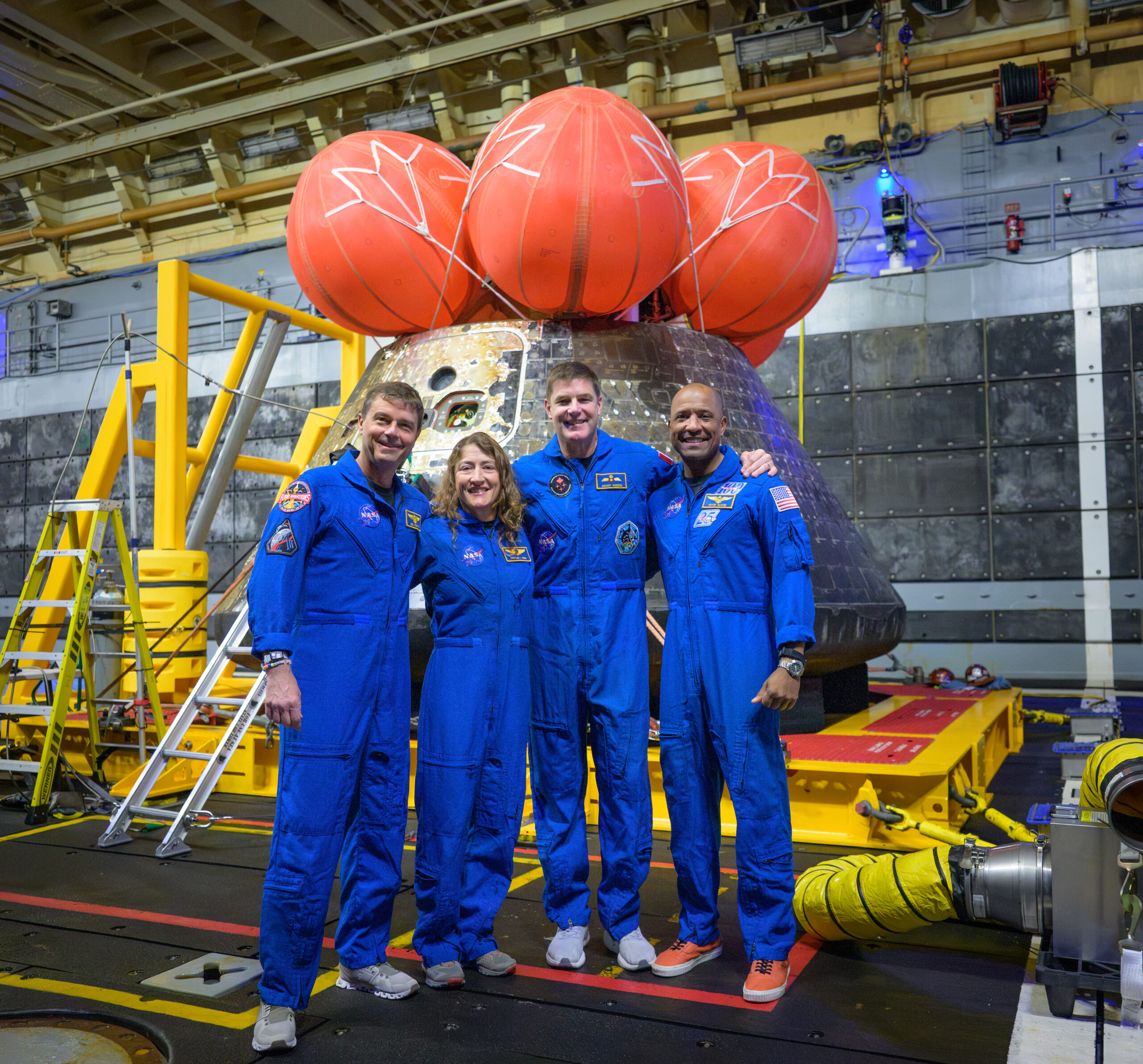
More than a week after its return to Earth, Artemis II stands as a clear success. Beyond its technological achievements, the mission has revived public enthusiasm and marked a series of milestones that go far beyond the scientific community. From deeply human experiences to new records, and ultimately future missions, we take a moment to review the key takeaways from this historic trip—including the hope and new possibilities it has brought.
A Shared Human Experience
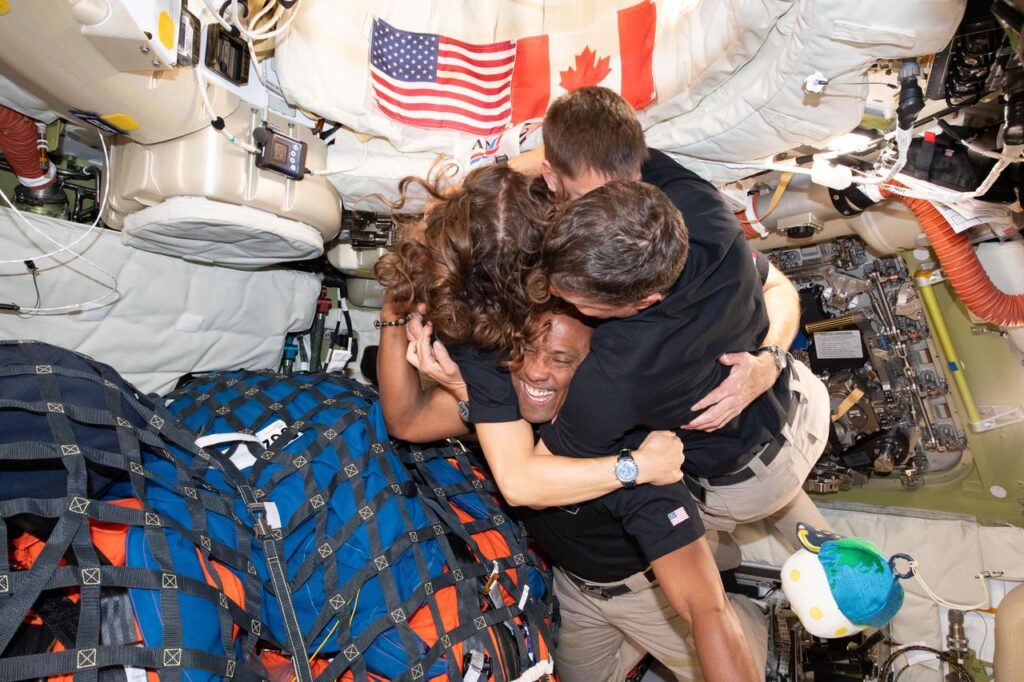
It is probably the most powerful and iconic image of the entire mission: that of the astronauts embracing on their way home (see picture below). After ten days spent together in space, far beyond Earth, this moment of relief and connection reveals something that numbers and records alone cannot fully capture. The crew—composed of three NASA astronauts, Reid Wiseman, Victor Glover, and Christina Koch, alongside Canadian astronaut Jeremy Hansen—formed a united team, whose joy and sense of connection were evident throughout the mission.
“The four of us are now forged in a friendship that is very unique,”
says Commander Reid Wiseman.
This unity quickly extended far beyond the crew. Millions followed the mission live, with more than three million watching the return on YouTube—an audience that shows how widely this event resonated among the general public. The mission also served as a rare moment of togetherness, with strong scientific and public support and renewed interest in lunar exploration.
A Technological Success
Beyond its human dimension, Artemis II marked a major technological milestone in space exploration. Launched on April 1, 2026, the mission confirmed the ability of Orion’s spacecraft to operate in deep space and return safely at high speed while testing key systems such as navigation and crew operations.
As a crucial step, the reentry into Earth’s atmosphere was particularly anticipated and closely followed by teams on Earth. During the last uncrewed test flight in 2022, the heat shield showed unexpected behavior under extreme conditions. This time, the return and splashdown were carried out with near-perfect precision. “The team hit it—that is not luck, it is 1,000 people doing their jobs” said NASA associate administrator Amit Kshatriya. The mission also supported scientific experiments, contributing to our understanding of how humans can live and work beyond low Earth orbit. According to Reuters, the mission “proved the viability of NASA’s systems.”
A New Look at Earth and the Moon
Artemis II offered the crew the opportunity to take stunning photographs not only of the Moon but also of our planet. Before the mission, the four astronauts underwent extensive training in photography and lunar observation, where they learned to identify surface features and capture images under demanding conditions. On their way to the Moon, the crew amazed us with striking images of Earth showing the entire globe, oceans covered with swirling white clouds, and a green aurora, to name just a few.
“It was very moving to look out the window,”
says Victor Glover.
Seeing Earth from space is often described as a unique inner experience called the overview effect, a cognitive shift reported by astronauts that highlights both the beauty and the fragility of our planet (see our related article).
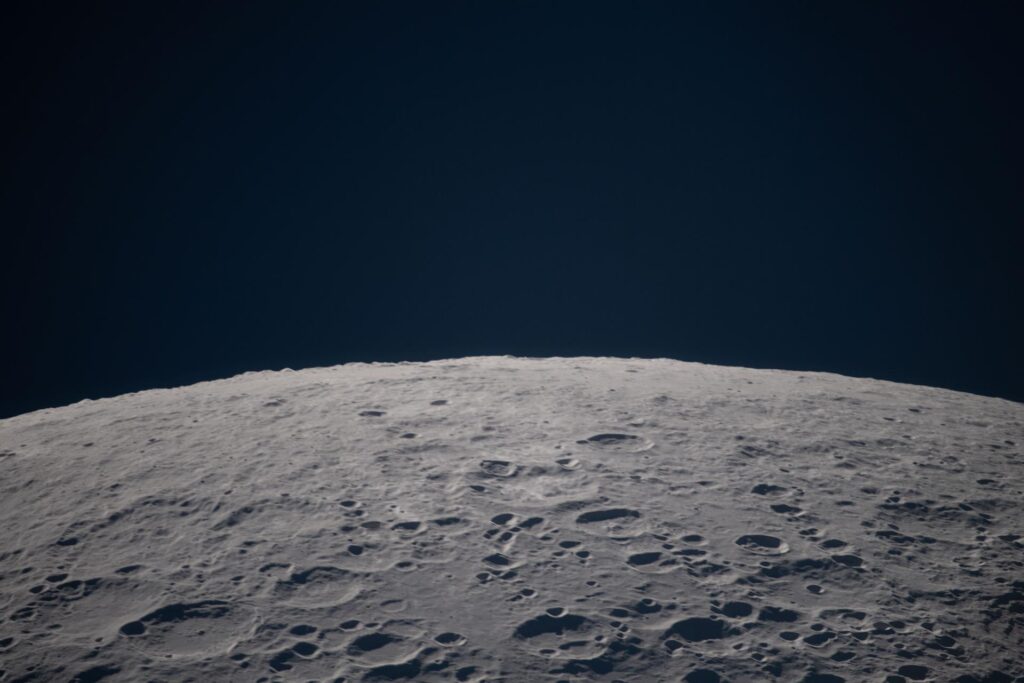
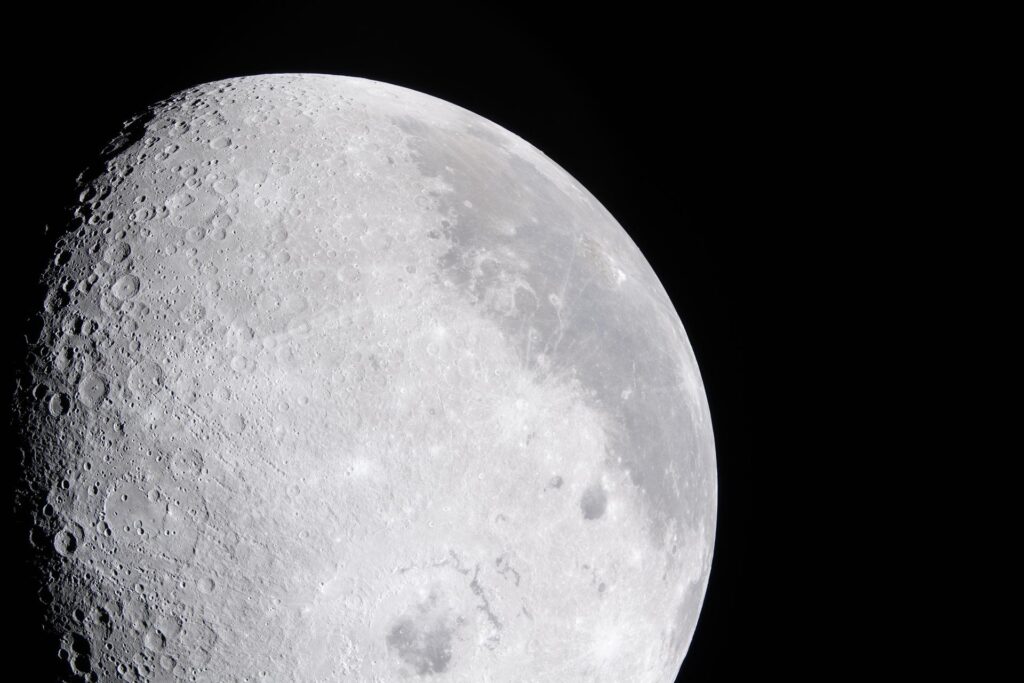
As they approached the Moon, the crew had more than six hours to observe its surface, including its far side—the part we never see from Earth. Unlike the previous Apollo missions, Artemis II was at a much higher altitude (6,545 km), allowing the crew to view the Moon as a full disk covering regions near the North and South Poles.
Breaking New Records
Pushing the limits of space exploration, the Artemis II mission has set a new record for the farthest distance ever traveled by humans, reaching 406,771 km from Earth and surpassing the previous distance record set by Apollo 13. It also marked the first crewed mission to deep space in over fifty years—the last was Apollo 17 in 1972.
Notably, the mission was the first lunar mission to include a non-American astronaut, Canadian Jeremy Hansen. Combined with contributions from the European Space Agency, Artemis II stood as a clear example of international commitment in the space sector suggesting broader collaboration for future missions.
Beyond these records, unexpected moments also stood out. As they flew over the lunar surface, the astronauts began naming craters below them, including one called “Carroll”, named after Commander Reid Wiseman’s late wife—another human touch in a mission already full of them.
Preparing Future Missions
Artemis II was more than just a simple trip to the Moon. One of its main objectives was to prepare what comes next. By testing Orion and its systems in real deep space conditions, the mission will directly contribute to upcoming Artemis missions, including the return of astronauts to the lunar surface, currently planned for 2028, and the development of a lunar base.
The Moon is often described as a “stepping stone” toward deeper exploration, offering a unique environment to test technologies and operations before venturing farther into space. As NASA’s Planetary Science Director Lori Glaze put it, “Artemis II is a key test flight in our effort to return humans to the Moon’s surface and build toward future missions to Mars.”
What Truly Matters Most
This brings us to the end of our overview of the most meaningful and uplifting aspects of Artemis II. Above all, what we will remember most is the sense of hope and unity that this mission has brought. In just a few days, it has managed to both warm hearts and remind us how precious our planet truly is. At a time when tensions and conflicts remain present across the world, these moments offer a brief sense of calm and perspective. They remind us that, despite our differences, we share the same planet—and that stepping back can sometimes bring us a little closer. After all, what are we in the vastness of the universe, if not a tiny grain of sand? And yet, that tiny grain is everything we know and care about.
Photo credit: NASA