
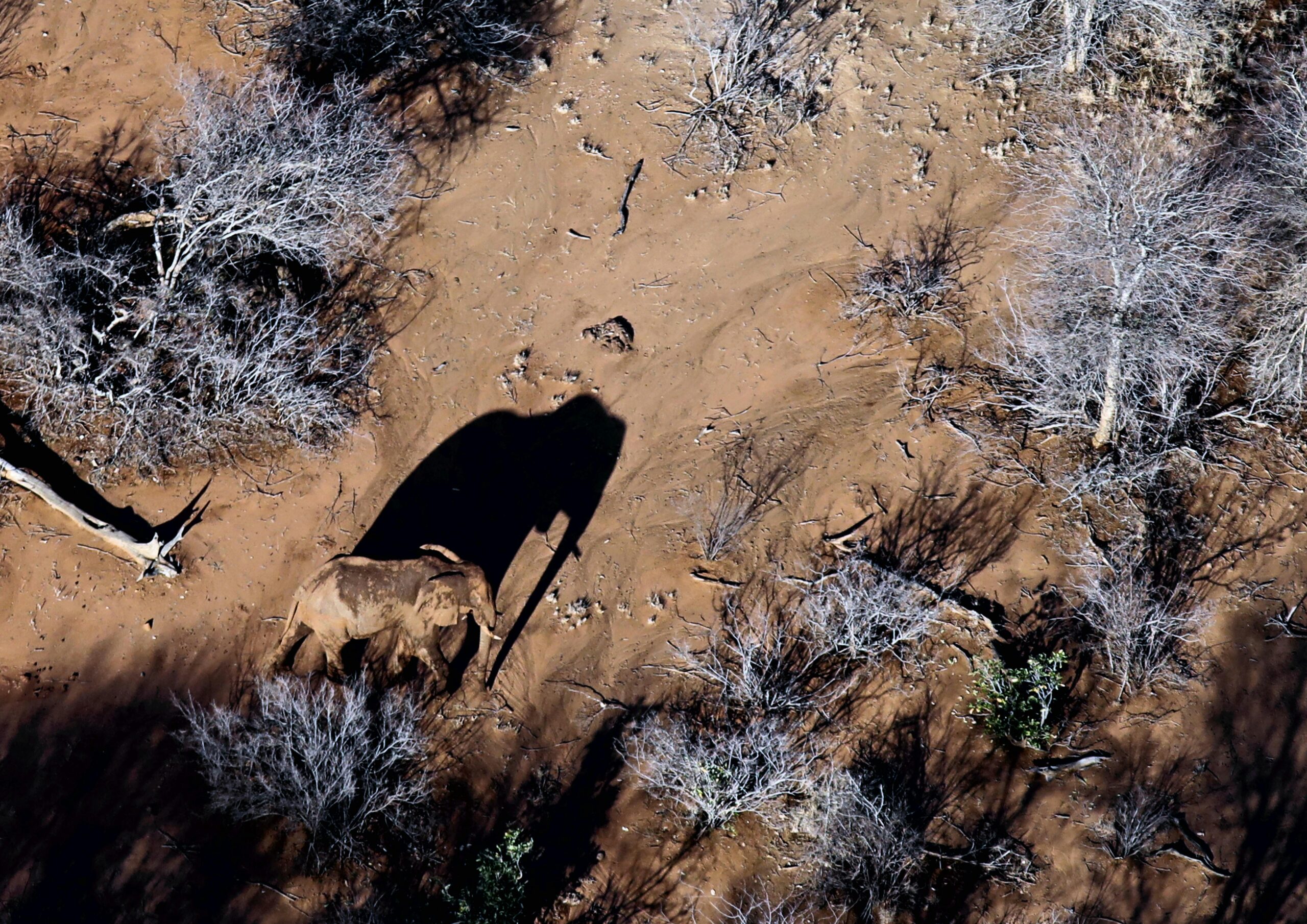
Among the 33 individuals honored in 2026 by National Geographic for their contributions to our understanding of the planet, Martin Wikelski stands out for his unique ambition: to listen to the pulse of the living world from space. Director of the Max Planck Institute for Animal Behavior in Germany, this ecologist and ornithologist has been leading the ICARUS (International Cooperation for Animal Research Using Space) project for over twenty years – a global tracking system for wild animals, recording their movement, behavior, and environmental conditions, using miniaturized transmitters. The data is then relayed via low-Earth orbit satellites.
ICARUS: A Global Observatory of Life
ICARUS monitors thousands of animals – from mammals to insects – in real time. The November 2025 launch marks a test phase for a new, more compact satellite, developed following a three-year hiatus in the program.
This project has seen many twists and turns since its inception in 2001: bureaucratic complications, technical failures, and a major geopolitical crisis. After the program was suspended in 2022 due to the war in Ukraine, which had ended German-Russian space cooperation, Wikelski says that this ordeal ultimately pushed his engineers to completely rethink the system.
On November 28, 2025, a satellite carrying the new ICARUS receiver was launched. This next-generation receiver measures 10 centimeters on each side and weighs about one kilogram – in contrast to the original antenna on the International Space Station, which was three meters long. A second satellite, developed jointly by the Max Planck Society and the space company Talos, is scheduled for 2026. Together, they form ICARUS 2.0 – a constellation designed to cover the planet in near real time.
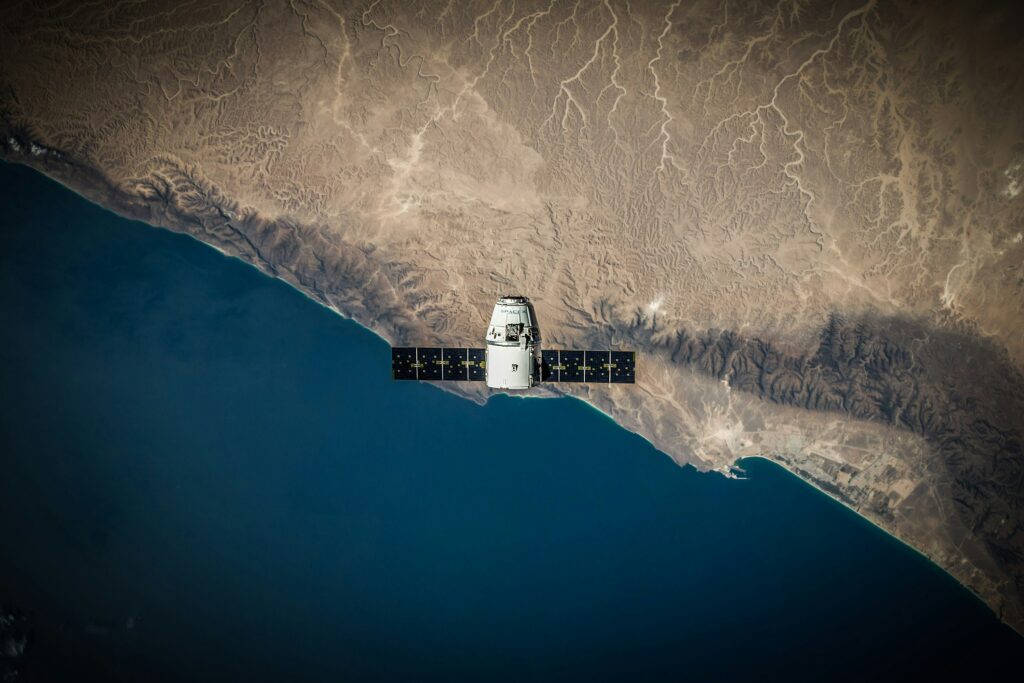
The solar-powered sensors worn by the animals weigh between three and four grams. A one-gram model – the weight of a paperclip – is under development for the lightest species. They record GPS coordinates, body temperature, humidity, atmospheric pressure, and accelerations, which reveal behavioral patterns.
By mid-2027, six ICARUS satellites will be operational, forming a global network that provides near-real-time information on animal movements. The longer-term goal is to equip up to 100,000 individuals by 2027.
Animals: The Invisible Guardians of Ecosystems
Beyond tracking migrations, ICARUS opens up new possibilities for science and conservation. Wikelski hopes to find answers to questions that have long puzzled him, including: What has become of the three billion songbirds that seem to have vanished from North America?
Early data has already yielded major discoveries: Hudsonian geese flying nonstop from Central America to Texas, cuckoos crossing the Indian Ocean between India and Africa. Every flight path, every behavioral anomaly, serves as a valuable indicator of an ecosystem’s health – often invisible through other means.
ICARUS will enable the detection of epidemics in their very earliest stages and the anticipation of ecological upheavals affecting both wildlife and human populations. Himalayan vultures could warn of extreme weather phenomena at high altitudes; wild goats in Sicily, sensitive to gas emissions, could foreshadow an eruption of Mount Etna. According to Wikelski, the project provides data that “will shape policies, guide conservation strategies, and deepen our understanding of the interdependence of life on Earth.”
The collected data will be freely available to researchers worldwide via Movebank, the world’s largest database of animal tracks. Wikelski is convinced that once people understand how essential animals are to the Earth’s ecological balance, they will be more motivated to protect them.
Space: A New Window into the Health of the Living World
ICARUS is part of a much broader revolution. For nearly 20 years, satellites have become essential tools for measuring the planet’s major ecological balances.
Satellite imagery now makes it possible to monitor the world’s major forests in near real time, identify critical hotspots of deforestation, and detect illegal logging activities with unprecedented precision. NASA recently developed a method combining multiple observation satellites to identify deforestation up to 100 days earlier than conventional systems.
Forests are not the only beneficiaries of this revolution. Satellites now measure coastal erosion, glacier melt, rising sea levels, and changes in wetlands.
Since 2018, NASA’s ICESat-2 satellite has been measuring tree height and ice thickness from orbit, providing climatologists with unprecedentedly accurate data on carbon storage and polar ice dynamics.
ESA’s Copernicus program continuously maps vegetation cover across Europe. It can thus provide geospatial information on land cover and its changes, land use, vegetation status, the water cycle, the cryosphere, and energy on the Earth’s surface.
What is emerging is a new discipline – spatial ecology – born from the convergence of satellite observation, artificial intelligence, and behavioral biology. Whereas it once took years to document major trends in deforestation, platforms like Planet or the Copernicus program now offer global images with a resolution of just a few meters, updated almost daily.
Martin Wikelski’s project is part of this movement.
“For the first time, we will be able to listen to animal signals around the world in near real time, offering unique insights into biodiversity and environmental changes,”
says the Max Planck Society.
With ICARUS and major Earth observation missions, space is becoming something no one really anticipated: the best window ever opened onto the health of the living world.
See more: https://e360.yale.edu/features/internet-of-animals-icarus




One thought on “Martin Wikelski, the Man Who Wants to Connect Nature to Space”
Comments are closed.