
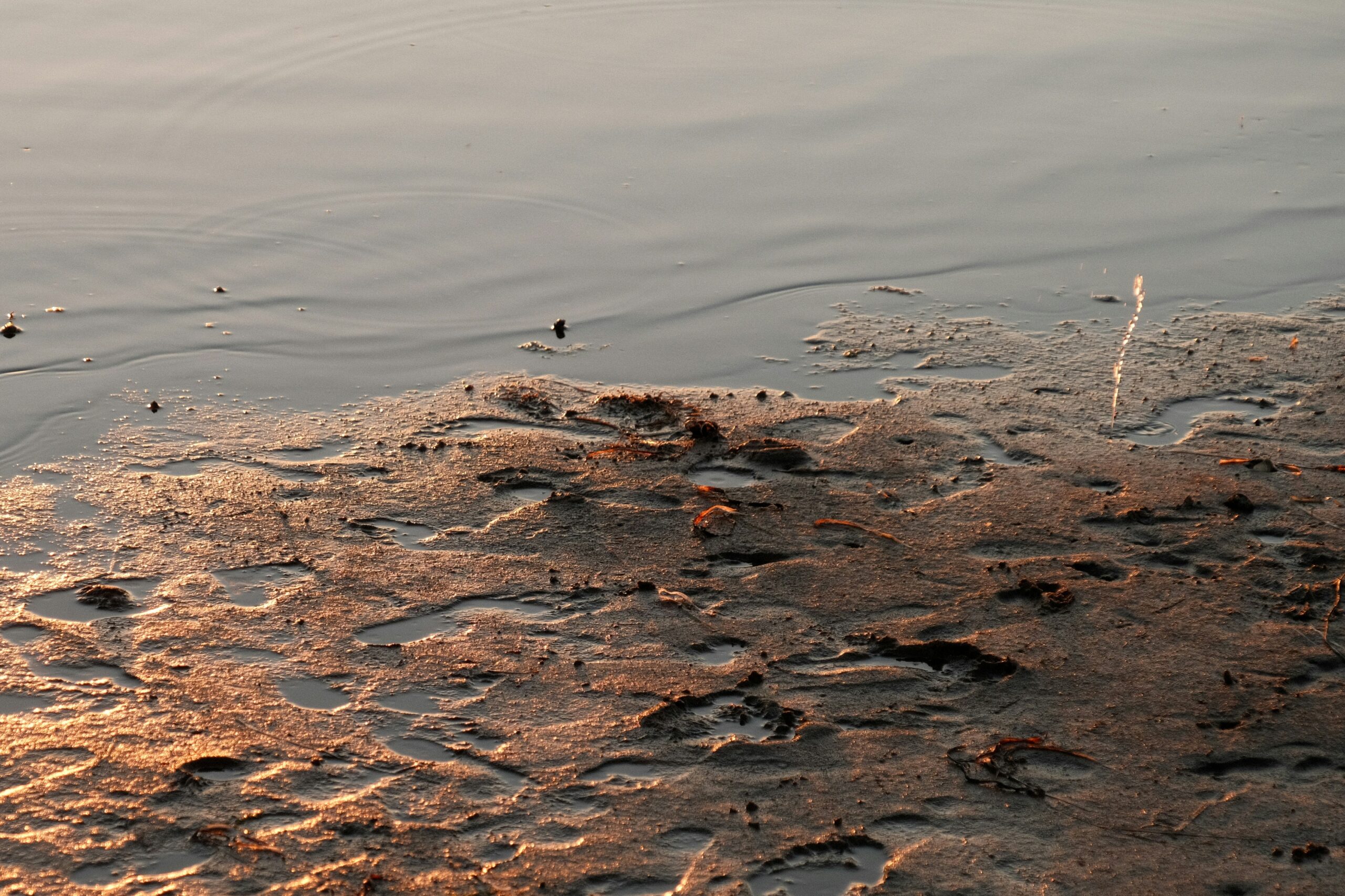
On the beaches of Brittany, France, Arenicola marina, or the blow lugworm, lives buried in the sand and often leaves behind only small coils at low tide. Some two decades ago, marine biologist and founder of Hemarina Franck Zal decided they were worthy of his scholarly attention. And today, on World Organ Donation Day, we celebrate how this discreet marine worm is helping medicine meet one of its great challenges to date: keeping organs alive long enough for transplantation.
Franck Zal, then a researcher at the CNRS, the French National Centre for Scientific Research, wondered how a marine worm could survive for several hours without breathing between two tides. He found the answer in the blood of the lugworm: extracellular, free haemoglobin, capable of carrying oxygen without being enclosed inside a red blood cell. In the lugworm, this molecule works as an oxygen reserve. In humans, he later found out, it could keep severed organs alive for hours while waiting to be transplanted.
The business of organ transplantation is, above all, a race against time. When a kidney, heart or lung is removed from a donor, it is no longer supplied with oxygen. The longer the wait, the greater the risk that the tissues will be damaged. The technology developed by Hemarina, the company founded by Franck Zal in 2007, uses the M101 molecule, derived from the lugworm, as an oxygen carrier in graft preservation solutions. M101 can bind far more oxygen than human haemoglobin and, because it is not enclosed in a cell, can circulate where red blood cells cannot pass as easily.
His insight has now earned Dr Zal the 2026 European Inventor Award in the SMEs category, awarded by the European Patent Office, for opening new perspectives in organ preservation, regenerative medicine, and cell therapy.
The principle of Franck Zal’s discovery rests on the ancient wisdom of the living world, on observing what nature has learnt to do, and then adapting it to ourselves. Zal’s product, HEMO2life®, is now approved for kidney preservation, and has already been used in complex transplants, including face, heart, liver and limb transplants.
One of the most striking stories comes from India. In 2021, at the Amrita Institute of Sciences in Kochi, HEMO2life® was used during a double upper-limb transplant. In an interview, Franck Zal recalls seeing the amputated arms regain a pink colour under perfusion, then fingers beginning to move on their own before they had even been reconnected. The fact that a molecule derived from worms from a beach in Brittany saved a man’s arms in India is perhaps nothing short of a modern-day miracle.
The hope for future applications of this discovery is immense. Scientific trials and publications are currently assessing the exact benefits of this technology, particularly in reducing injury caused by lack of oxygen and improving graft recovery. In a world where tens of thousands of people are waiting for a transplant, gaining a few hours can mean more possible matches, fewer organs lost, and more chances offered to patients.
Ultimately, the story of Franck Zal reminds us that, sometimes, the most useful discoveries arise from patiently observing the seemingly most insignificant things we tread underfoot.