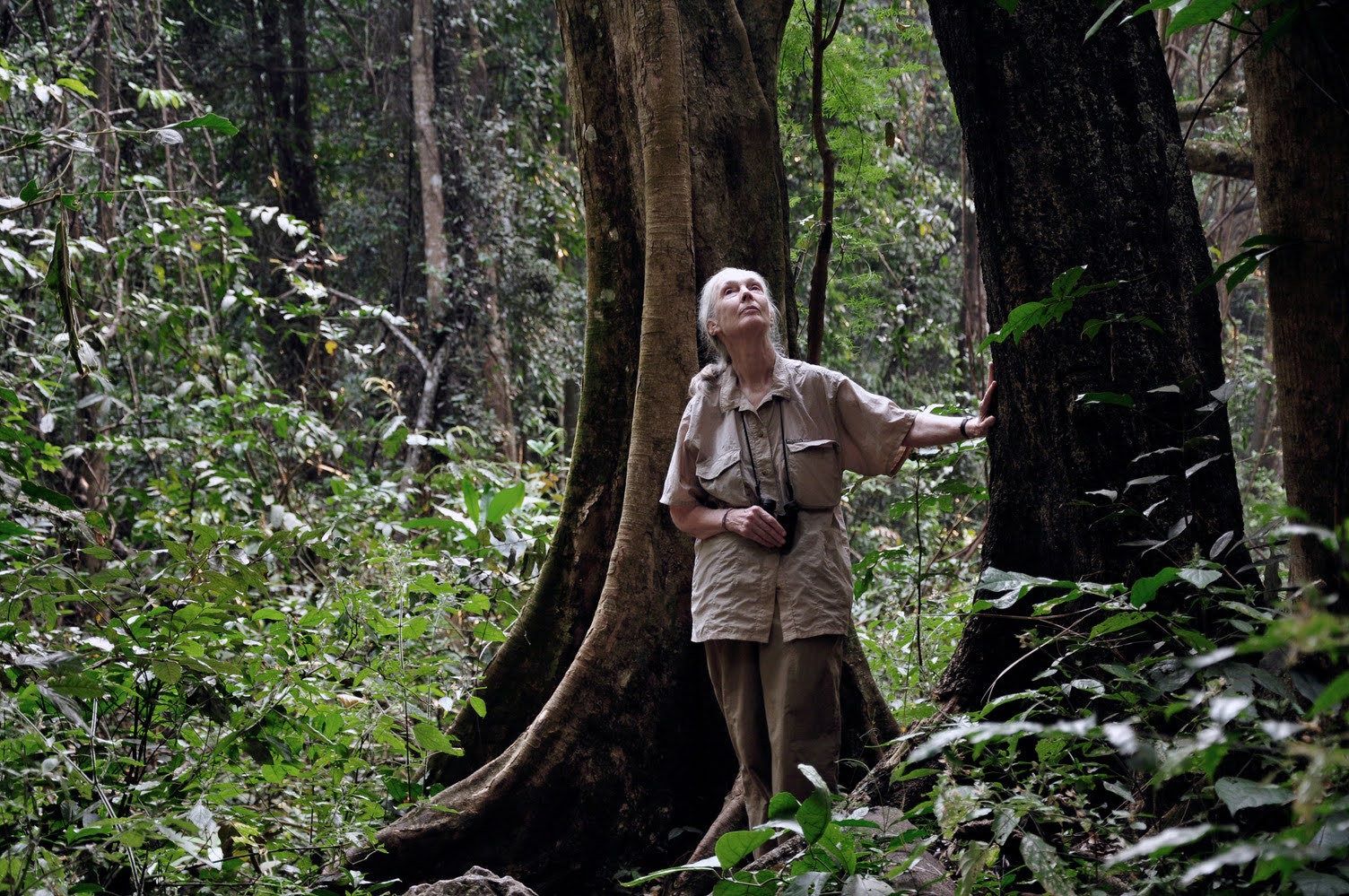
Dr. Jane Goodall, DBE, Founder of the Jane Goodall Institute, and United Nations Messenger of Peace by Chase Pickering
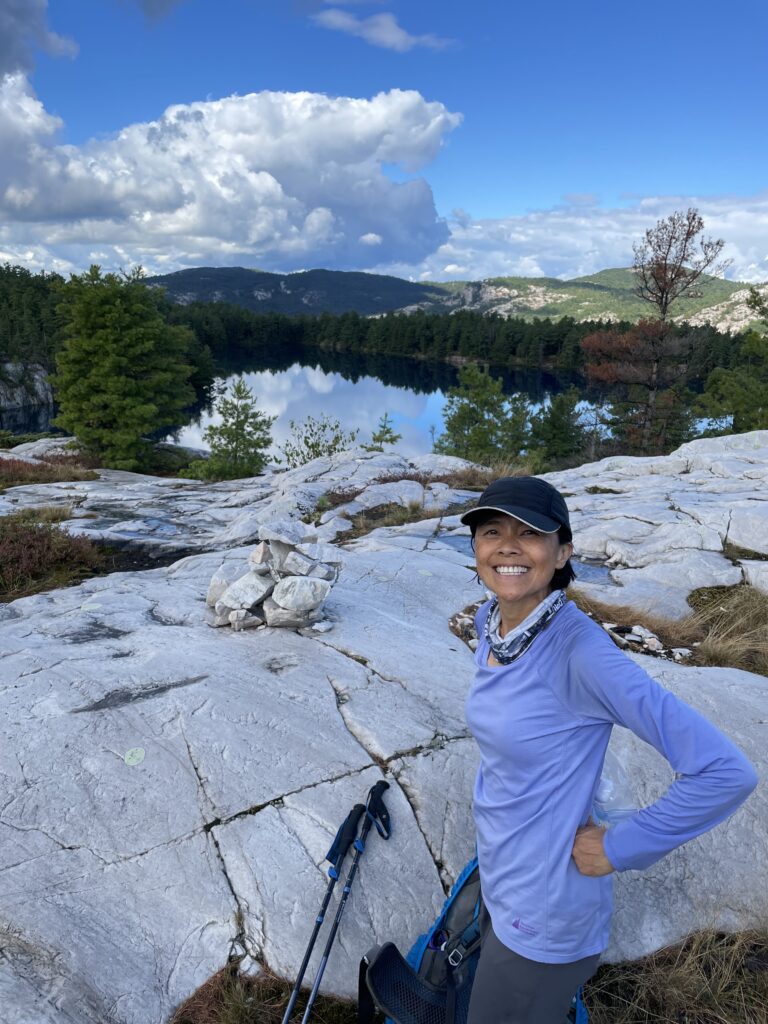
On October 3rd and 4th, people across Canada are lacing up their shoes, stepping outside and hiking for hope.
The first Jane Goodall Hike for Hope invites people to choose their own route, hike at their own pace, and raise funds for community-led conservation and youth-led environmental projects through the Jane Goodall Institute of Canada.
This event takes place just over a year since the passing of Dr. Jane Goodall, whose work transformed our understanding of chimpanzees and grew into a lifelong commitment to animals, people and the environment.
The Hike for Hope is not simply a walk in her memory; it carries forward an idea at the heart of Jane Goodall’s work: hope is not passive. It is something we can put into action. As Jane herself put it, in one of her final messages to Canadians, recorded in September 2025: “Join the Hike for Hope. Each step is a gentle reminder that each one of us matters and has a role to play.”
Bella Lam, Chief Executive Officer of the Jane Goodall Institute of Canada
by Bella Lam
From Observing One Species to Understanding a Whole World
Jane Goodall first travelled to what is now Tanzania in 1960, at a time when very little was known about chimpanzees living in the wild. She began observing them patiently, spending long periods in their natural environment and gradually developing an unusually detailed understanding of their behaviour.
One of her earliest discoveries would become one of the most important moments in the history of animal science: she observed a chimpanzee making and using a tool to extract termites from a mound. This discovery changed the way we understood the animal kingdom, while also challenging the long-held definition of what made humans distinct, since tool-making had been considered uniquely human, because it is a cultural trait. It was probably one of the first times we understood that animals can develop culture as well.
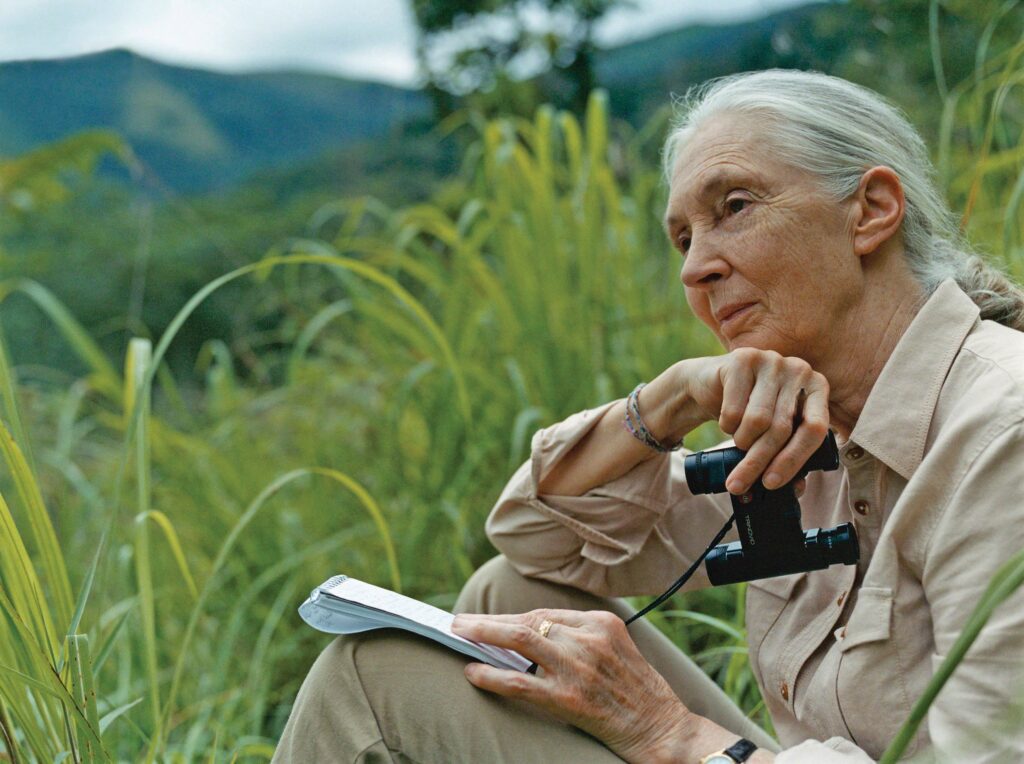
Dr. Jane Goodall by Morten-Bjarnhof
Perhaps the most lasting legacy of her years in the forest was not a single scientific discovery. It was a different way of seeing the natural world. Through her close observation of chimpanzees, Goodall came to understand the complexity of their lives, and the profound interdependence between animals, their habitats and the people living alongside them.
That understanding eventually led her beyond research and into conservation.
A Holistic Vision of Conservation
Jane’s early work with chimpanzees helped reveal how deeply interconnected the living world is. The Institute has carried that understanding into a holistic approach to conservation, designing programs that address and benefit all three: programs intended to benefit animals, people and the environment together.
Protecting one part of the system while overlooking the others can only go so far. The Institute’s work therefore seeks to create conditions in which animals, people and environments can thrive together. For example, across Africa, local partners work on projects that can include forest protection, sustainable livelihoods and nature-based responses to environmental challenges.
The goal is not simply to preserve nature as something separate from human life. It is to recognize that we are part of the same living system. It offers another way of imagining our relationship with the living world.
Preparing the Conservation Leaders of Tomorrow
Perhaps one of the most hopeful parts of the Institute’s work is its focus on young people. Through Roots & Shoots, Jane Goodall’s youth program, young people are encouraged to identify challenges in their own communities and develop projects that benefit animals, people and the environment.
In 2026, through the Roots & Shoots program, the Institute’s A.P.E. Fund awarded funding to 151 youth-led projects across Canada, with more than 14,000 young people expected to participate in activities ranging from composting and pollinator gardens to beach clean-ups and environmental restoration.
The deeper purpose is to give young people the knowledge, confidence and experience they need to become the conservation leaders of tomorrow.
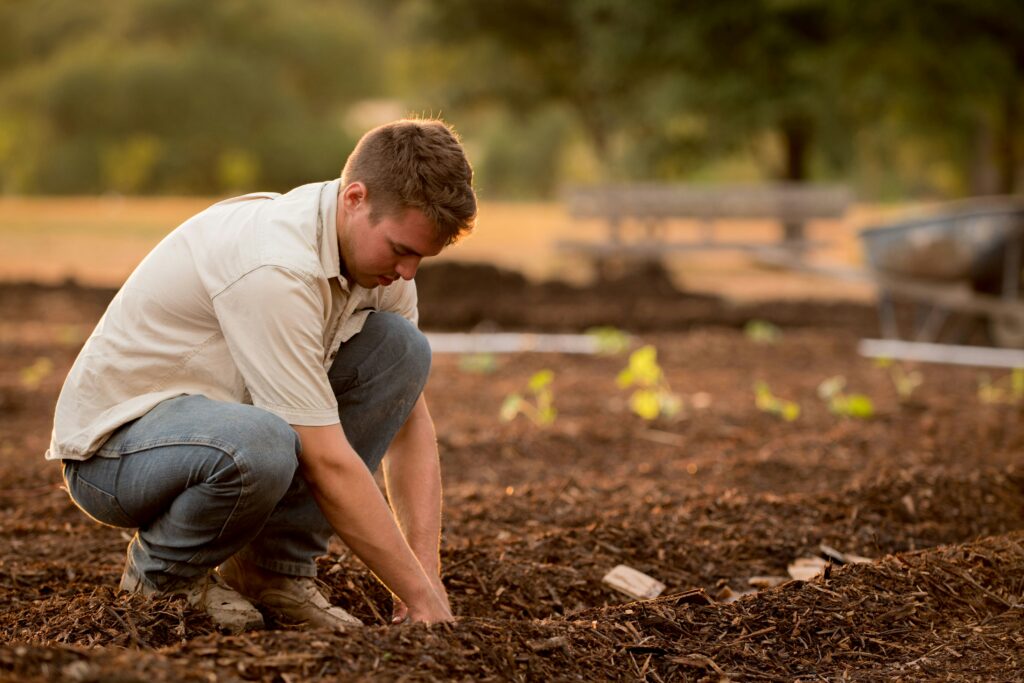
In doing so, the Institute is not only responding to today’s environmental challenges. It is helping prepare the people who will care for the living world in the years ahead, while telling them they do not have to wait until they are adults to make a difference.
Inspire Hope Through Action
Hope can easily be understood as something we hold while waiting for circumstances to change. But Jane Goodall’s legacy suggests a more active understanding of hope.
To inspire hope through action is to do more than speak about a better future. It is to participate in creating the conditions that make that future possible, and in doing so, to show others that change can happen.
A person takes a step. A community restores a forest. A young person plants something that will grow long after they leave school. A local partner develops a way of protecting both livelihoods and wildlife. Thousands of individual actions can begin to form something larger. And perhaps this is where hope becomes powerful. When we see people acting, creating, restoring and caring, their actions can give us reason to hope. But hope does not have to end there. It can become the first step towards the will to act and create change ourselves. And as Napoleon Bonaparte once said, “Where there’s a will, there’s a way, and where you can, you must.”
This is the cycle: action can inspire hope, and hope can inspire us to act. By sharing stories of people who are already creating change, the Jane Goodall Institute seeks to make that change visible, and to encourage more people to take part.
Perhaps the most powerful part of hope is that it does not ask us simply to wait for a better future. It invites us to participate in creating one in the present, and to help make that possibility visible to others.
One Step at a Time
Jane Goodall spent her life reminding people that the future is not entirely beyond our influence.
This wider vision was also at the heart of Jane Goodall’s reflections on responsibility and our role in the world. We explored some of those ideas in our previous Voice of the Wise dedicated to her.
Her work began with quietly observing chimpanzees in a forest. It grew into a global movement built around a much larger understanding: animals, people and the environment are part of one interconnected living system. And with that, she brought back in modern societies an old wisdom present in traditional societies, and that we find today in First Nations, such as the principle of interconnectedness in nature . The Hike for Hope carries that message forward. On October 3rd and 4th, participants across Canada will choose their own paths. Yet together, those paths will form something larger, a collective gesture of remembrance, care and action.
The Hike for Hope is intended as more than a memorial. By supporting community-led conservation and youth environmental projects, it offers participants a practical way to carry forward one part of Jane Goodall’s legacy: the belief that care for people, animals and the environment cannot easily be separated. Rather than mere passive remembrance, in Goodall’s spirit, the hike converts her anniversary into an opportunity to reconnect with nature, to recognize our place within a wider living web and into a reminder that each of us can take hopeful action within our interconnected world, one step at a time.
Here is a video by Jane Goodall Institute of Canada, for the Hike for Hope event.