
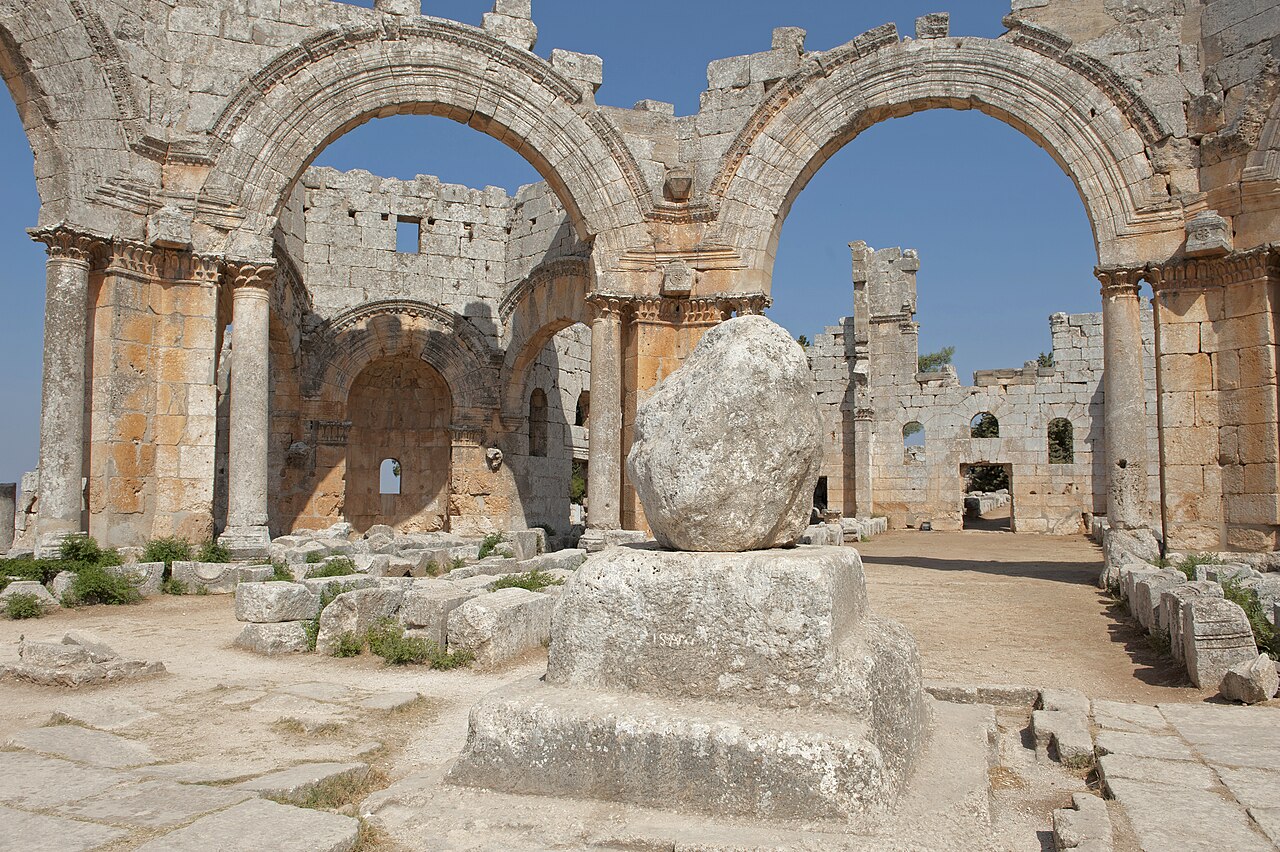
The remains of Saint Simeon Stylites’ pillar, surrounded by the ruins of the sanctuary. Photo: Dick Osseman / Wikimedia Commons, CC BY-SA 4.0
The ancient sanctuary of Saint Simeon Stylites, near the village of Deir Samaan in northern Syria, is known for its remarkable spiritual history. For centuries, generations of pilgrims visited this sacred site, seeking moments of contemplation in the very place where a man devoted his life to prayer. On September 28, after fourteen years of closure marked by war and an earthquake, the sanctuary is welcoming visitors again.
Making this reopening possible required a tremendous amount of work. Teams cleaned the grounds, repaired paths and facilities, and reinforced vulnerable structures. These efforts have made the ancient sanctuary accessible again, allowing visitors and researchers to rediscover an important part of Syria’s religious heritage.
A Life Devoted to Prayer
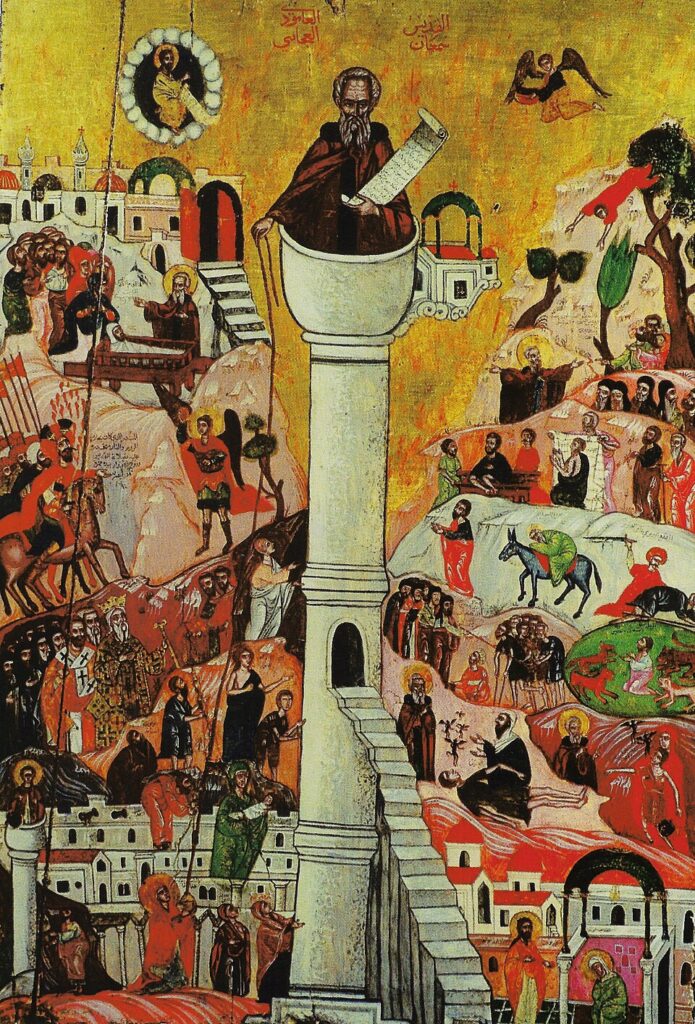
Simeon, also known as Simeon the Elder, lived in the fourth and fifth centuries. Seeking solitude and a life centered on prayer, he adopted an unusual form of asceticism: living on a small platform at the top of a pillar. For him, rising above the ground was a way of drawing closer to God.
According to the French Ministry of Culture’s archaeological account, Simeon spent some forty years on a succession of columns, each higher than the last. This practice became known as stylitism, from the Greek word stylos, meaning pillar.
His search for solitude gave rise to a gathering place. After his death in 459, a large sanctuary was built around his final column. Pilgrims came to the site, where churches, a monastery, a baptistery and accommodation developed to receive them. Shops lined the route leading towards the sanctuary.
Even today, the surviving complex preserves the scale of that devotion. It forms part of the Ancient Villages of Northern Syria, inscribed on UNESCO’s World Heritage List in 2011 and added to its List of World Heritage in Danger in 2013.
Saint Simeon Stylites depicted atop his column in a Syrian icon dating from before 1667. Image: Wikimedia Commons, public domain
Bringing the Sanctuary Back to Life
Syria’s recent war left deep scars on the sanctuary. In May 2016, UNESCO reported heavy damage to the church, possibly caused by an air strike. The earthquake that struck the region in 2023 brought even more damage.
The work to reopen the sanctuary to visitors brought together antiquities authorities, representatives of Christian communities, volunteers and archaeology students from Aleppo University. Among their achievements was the return of the remains of Simeon’s column to their place at the center of the church.
The return of the column carried particular meaning for the Christian communities involved. In August, religious leaders, priests, monks and other participants gathered for a ceremony marking the column’s return. Archbishop Aphrem Maalouli led prayers before it, a choir performed Byzantine hymns, and the ceremony included a blessing with holy water.
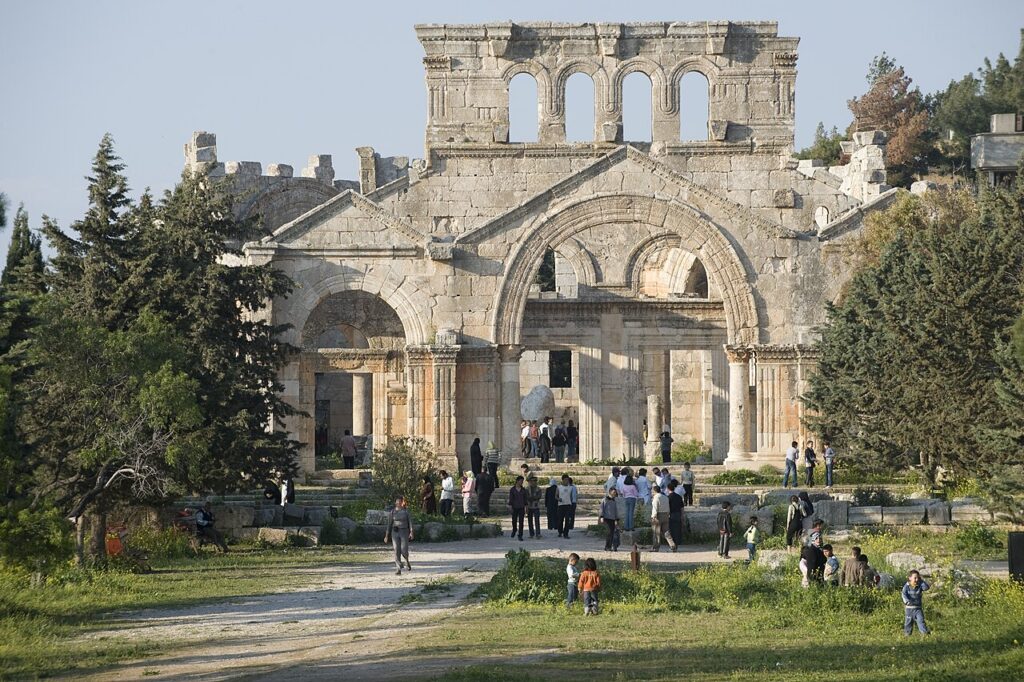
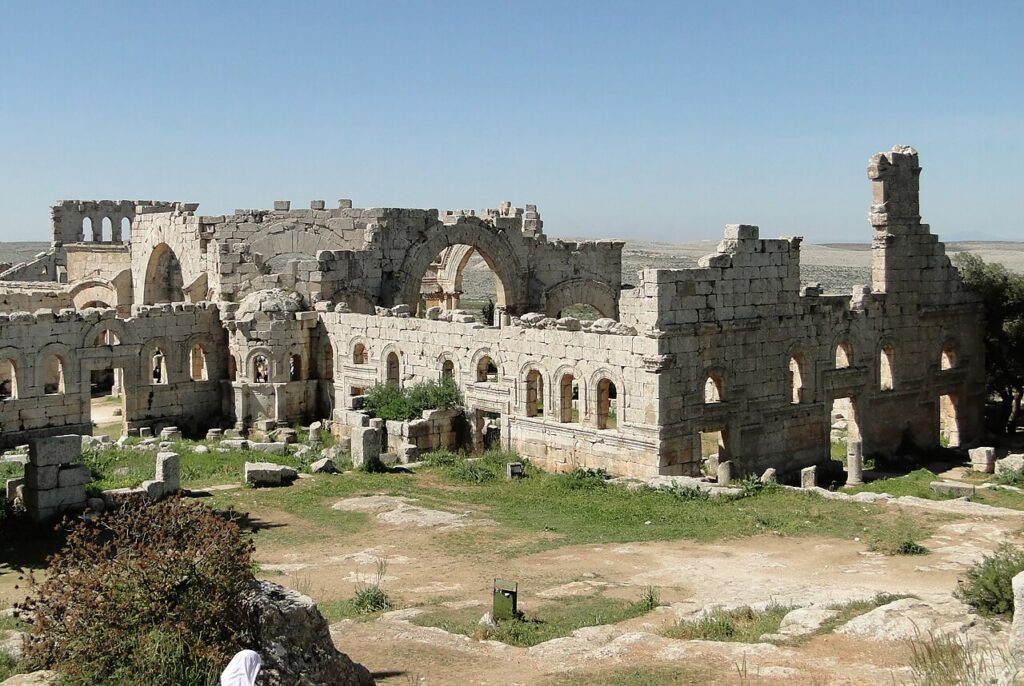
Visitors gather outside the southern façade of the Saint Simeon Stylites sanctuary. Photo: Dosseman / Wikimedia Commons, CC BY-SA 4.0 and A panoramic view of the Saint Simeon Stylites sanctuary. Photo: Bernard Gagnon / Wikimedia Commons, CC BY-SA 3.0
For those present, the stone was a tangible connection to a spiritual tradition that had endured across sixteen centuries. Even after war and an earthquake, people were coming together once more in a place that had inspired prayer for generations. According to SANA, visitors at the reopening spoke of the opportunity to reconnect with their country’s archaeological heritage.
For a place shaped by the search for solitude, its recovery has depended on many people working together. Their efforts have made room once more for visitors to walk among its ancient stones, discover Simeon’s story, and encounter a place that generations before them held sacred.