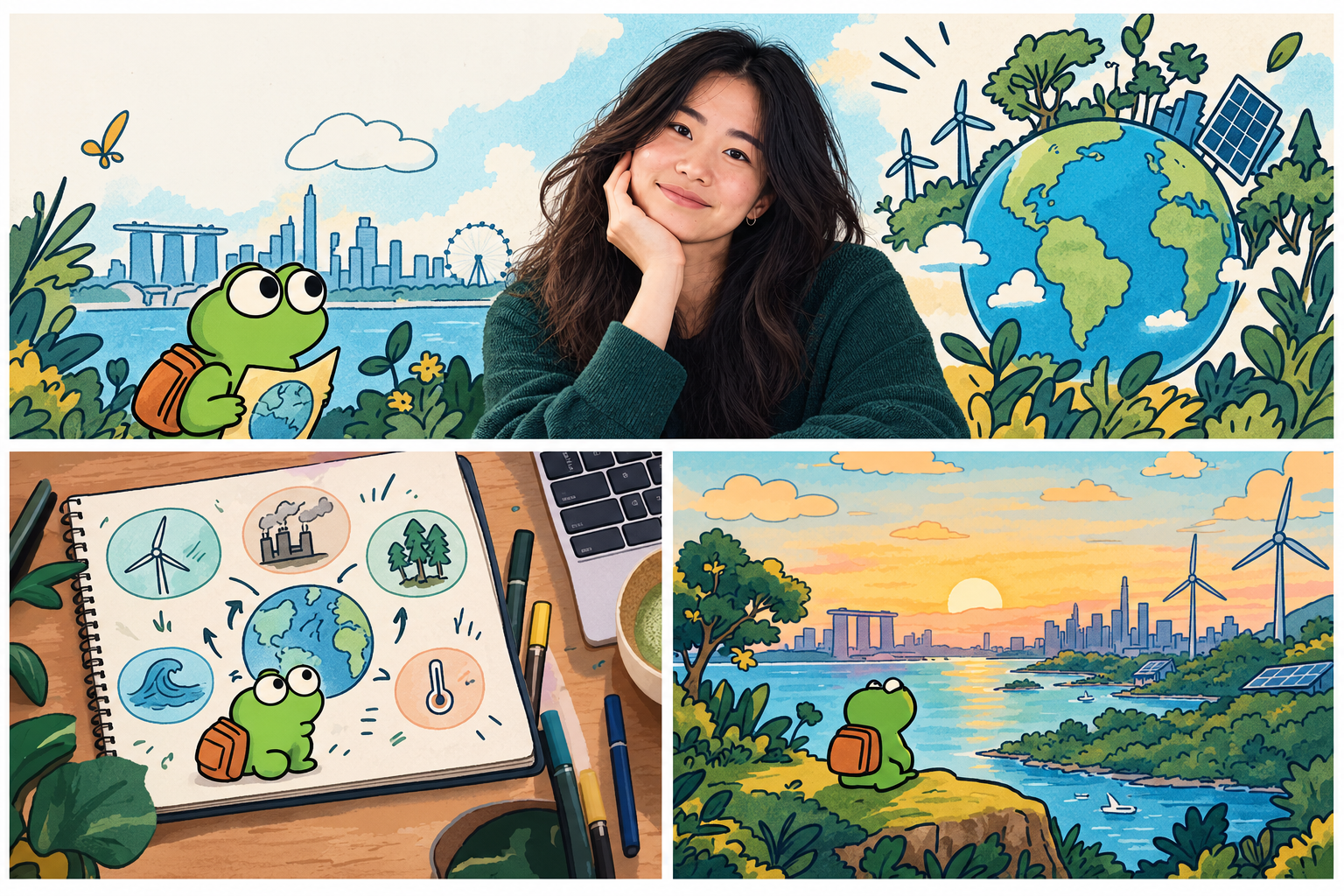
This year, National Geographic named Qiyun Woo to its 2026 National Geographic 33, a list of 33 changemakers working to make the world a better place. Her tools: a few pencils, a frog, and a great deal of science.
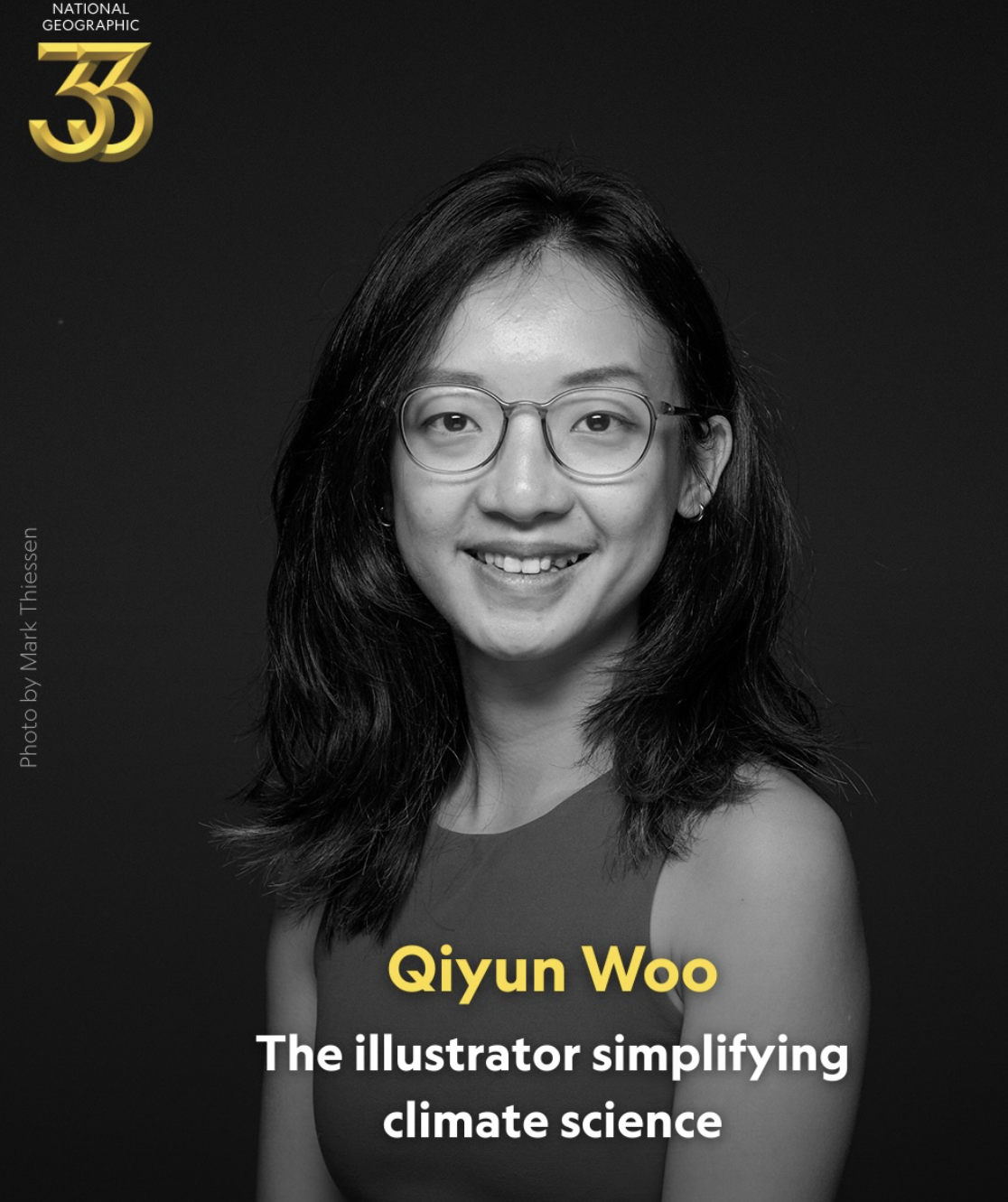
Qiyun Woo is a Singaporean illustrator and science communicator in her late twenties. Trained in environmental science at the National University of Singapore, she is the creator of The Weird and Wild, a science communication project that uses illustrations to explain environmental issues. Today she works as Senior Communications Manager for the Technical Support Unit of Working Group II of the IPCC, the Intergovernmental Panel on Climate Change, the United Nations body that assesses climate science for governments. Based at Singapore Management University, Qiyun Woo is neither a researcher in the traditional sense nor simply an artist: she works at the point where the two meet.
Qiyun Woo’s work addresses a simple question: how can we help people understand climate issues when numbers, reports, and graphs seem to speak a different language? The young woman found her answer in illustration. With The Weird and Wild, she transforms complex topics such as climate change, biodiversity, and environmental policies into accessible comics, illustrations, and videos—all while maintaining factual accuracy.
But behind the awards and prestigious institutions, her journey above all reflects a conviction: science can only bring about change if it is understood and shared. When it is, climate change stops being a subject for specialists and becomes a challenge we can face together, whatever our country or background.
A Frog, a Few Pencils, and a Whole Lot of Science
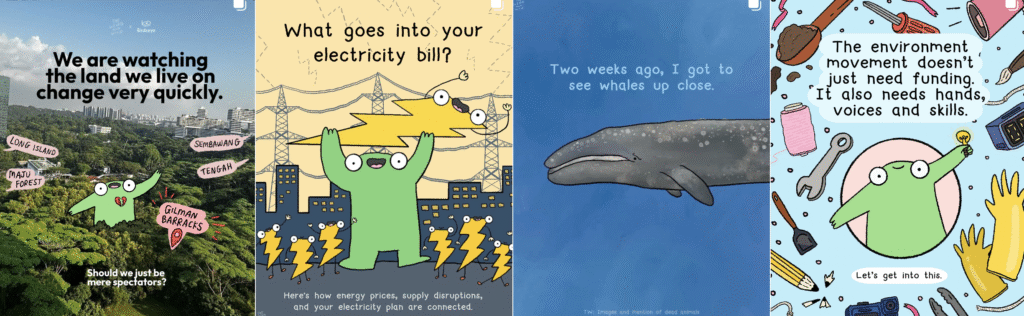
It was in 2018, while she was studying environmental science at the National University of Singapore, that Qiyun Woo launched The Weird and Wild. The idea was simple at first: to share information and tips about the environment with her friends and family. The project quickly took on a whole new dimension.
On her Instagram account, topics that might seem reserved for specialists take the form of characters, drawings, and stories. A curious frog becomes one of the central figures in her visual universe. Through the frog, she discusses climate, biodiversity, energy, and environmental policies without starting with a 200-page report. Social media is often blamed for shortening our attention spans. Her account shows the opposite: the same tools can make a complex subject something people actually want to learn about.
Qiyun Woo believes that one of the challenges of climate communication is precisely to make scientific information accessible enough for everyone to grasp. Global Citizen, an international advocacy organization best known for its annual Global Citizen Festival, which campaigns to end extreme poverty and also addresses climate issues, describes The Weird and Wild, as a visual medium that uses comics and graphic elements to make climate science more understandable.
Qiyun Woo does not seek to pit simplicity against seriousness. She is looking for a different gateway to knowledge.
Stories resonate more than statistics
Bringing Climate Issues from the Screen to Reality
This approach could have remained confined to social media. Yet it has taken Qiyun Woo far beyond Instagram.
She has worked on infographics, animations, and environmental communication campaigns for various organizations and companies. She also co-hosts Climate Cheesecake, a podcast dedicated to sustainability issues in Southeast Asia. In 2025, Forbes noted that The Weird and Wild had become a true educational platform, capable of transforming complex environmental topics into content that informs and encourages action. Her work has been recognised well beyond Singapore: National Geographic Young Explorer in 2023, the BBC’s 100 Women list the same year, and Forbes 30 Under 30 Asia in 2025.
Her experience has also taken her to major international climate conferences. At COP28, she was invited as a content creator for the Singapore Pavilion, with a very specific mission: to help the public understand what’s really at stake behind the flood of negotiations, news, and jargon that accompanies every COP.
Her work has come a long way : the woman who started out explaining environmental issues through drawings now finds herself at the heart of international science communication.
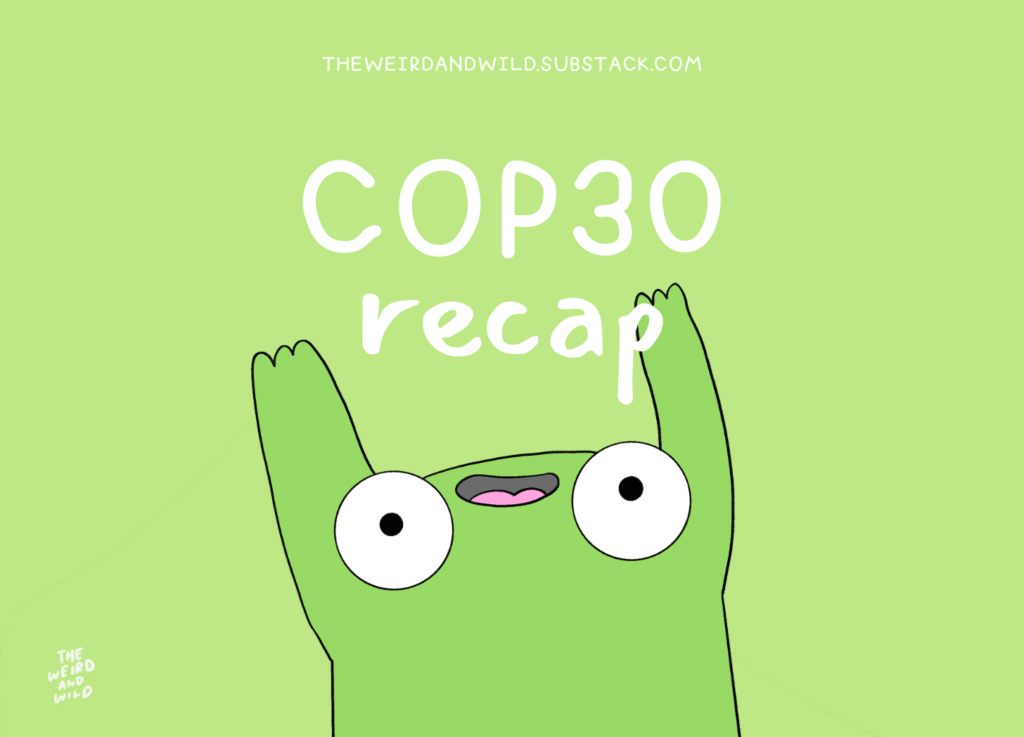
Today, the IPCC
The IPCC was created in 1988. It brings together the work of thousands of scientists who contribute voluntarily, and its reports are the main scientific reference for governments and international climate negotiations.
Working Group II, the one Qiyun Woo works for, focuses on the impacts of climate change, adaptation, and vulnerability—issues that directly affect societies, regions, economies, and ecosystems. Her team supports the group’s co-chairs and authors, and she helps develop communication materials and share the results of scientific research with policymakers, stakeholders, and the general public.
Her role therefore lies at this crucial juncture: between knowledge and those who need to understand it in order to apply it. She is a specialist in an indispensable link of the scientific chain: translating, narrating, and conveying information without distorting it.
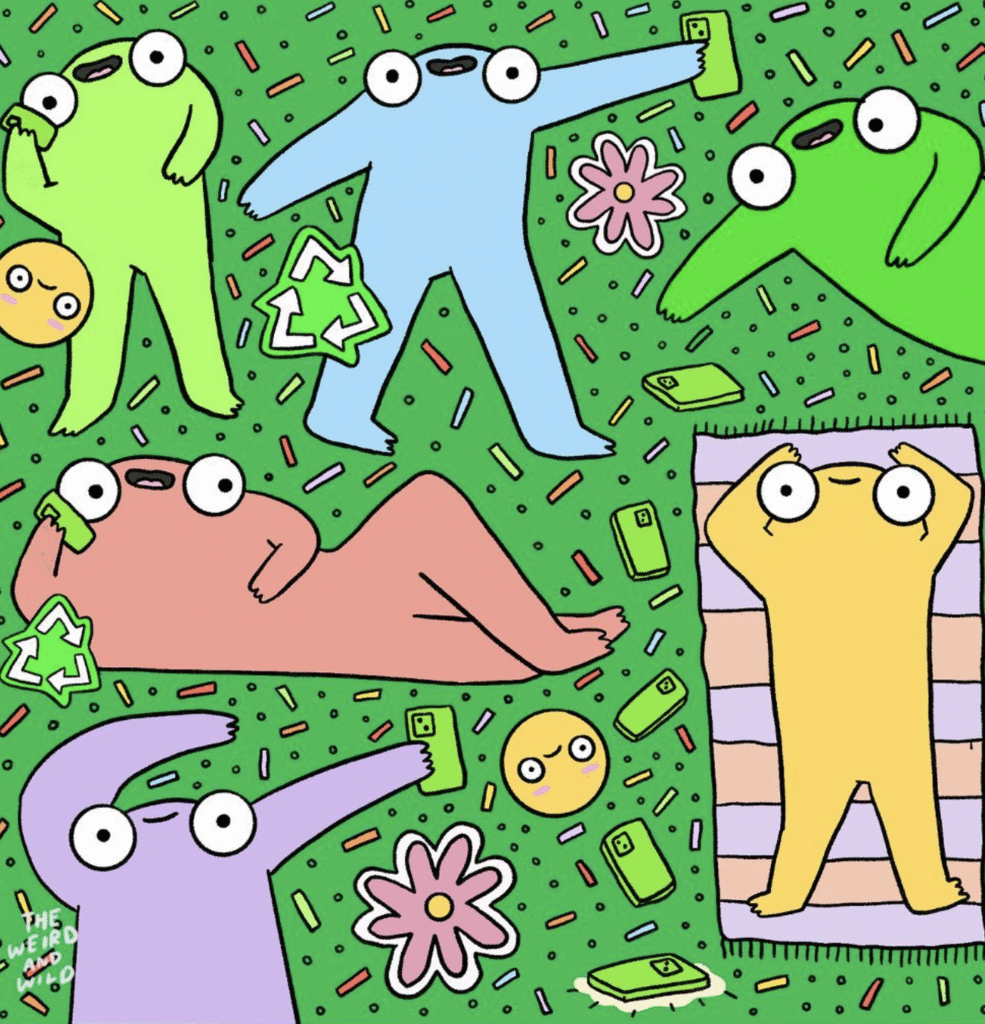
A student with a few pencils. A curious frog who makes the climate approachable. A social media account that makes people curious instead of distracted. And now, a seat at the table where the world’s climate science is shaped.
Qiyun Woo’s story reminds us of three nice things: young people do not wait for permission to act, social media can be a force for good, and a good story can bring people together around the same challenge, wherever they come from.
With a few pencils, a frog, and a great deal of curiosity, Qiyun Woo builds bridges between those who produce science and those whose lives may be affected by its findings. So next time you scroll, there might be a small frog waiting to teach you something about the planet. Go say hello 😉 !