On October 31, World Cities Day highlights new ways of thinking about our urban spaces. From Paris to Milan, Rome and London, concrete initiatives show how cities can be regenerated to make more room for nature, improve quality of life and build a more inclusive future.
Cities are at the heart of the major transformations shaping our time. They face challenges related to housing, climate change, biodiversity and social inequality. But they are also places of innovation, where new ways of living, building and sharing urban space are taking shape.
For its 2026 edition, led by UN-Habitat, World Cities Day focuses on a fundamental issue: “Regenerating the City: Adequate Housing for All.” According to the United Nations, up to 3.4 billion people lack adequate housing, essential services or affordable living conditions.
In response to these challenges, a new approach to urban development is emerging: regenerating existing neighbourhoods by breathing new life into brownfield sites, renovating buildings and bringing nature back into the heart of urban spaces. The goal is no longer simply to build more, but to make better use of what already exists and improve residents’ quality of life.
This approach builds on a topic we previously explored in our article about cities helping the Earth breathe again, which highlighted initiatives to unseal urban surfaces, manage rainwater more effectively and make neighbourhoods greener. This time, the focus broadens: how can these transformations also make cities more liveable, accessible and responsive to the needs of the people who call them home?
Four European initiatives offer some answers.
In Paris, biodiversity is driving urban transformation
In September 2026, Paris won the Grand Prize at the AIPH World Green City Awards, recognizing its approach to biodiversity in one of Europe’s most densely populated cities.
The award celebrates a strategy that goes far beyond creating parks. Paris is progressively integrating nature into its streets, buildings, schoolyards and urban planning rules. The city had already reached its target of 150 hectares of green roofs, walls and courtyards by 2025. More than 100,000 street trees have also been planted, and 3,400 wild species have been recorded across the capital.
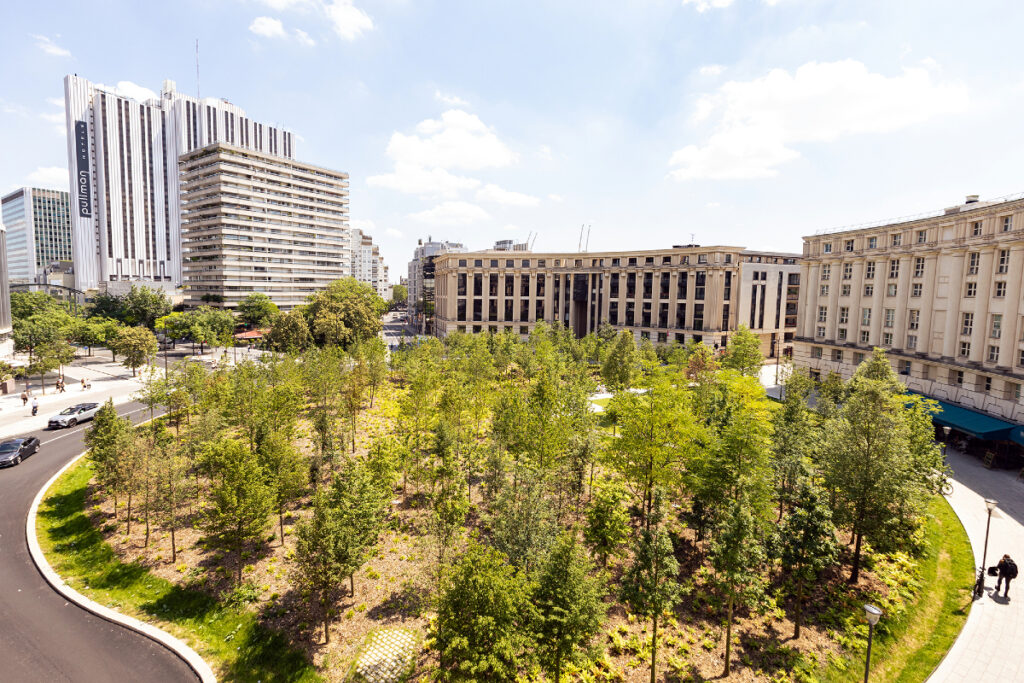
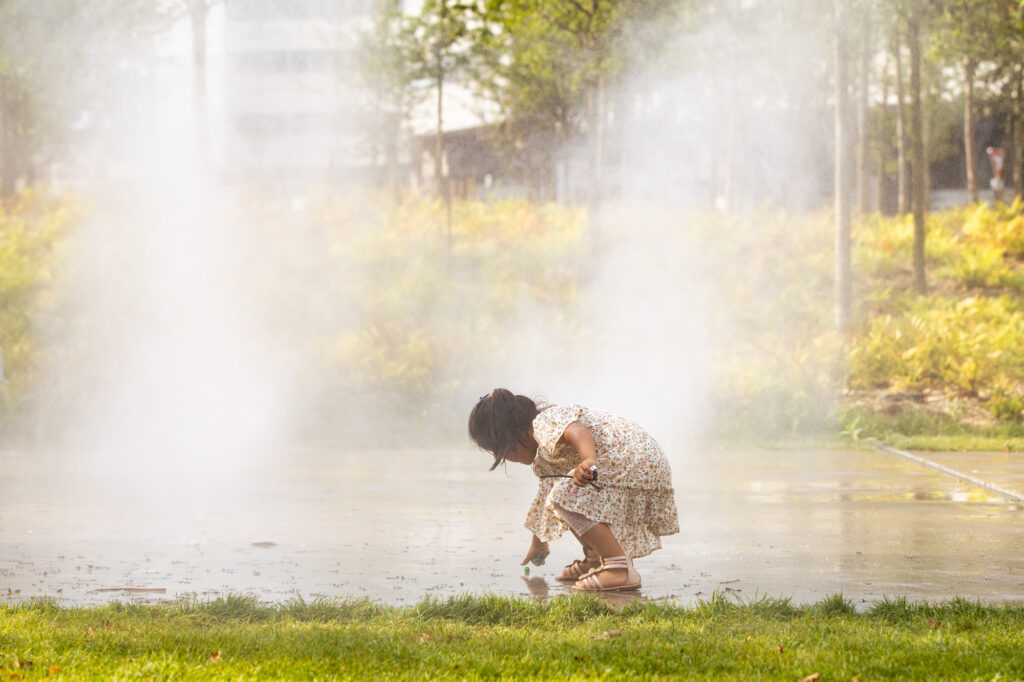
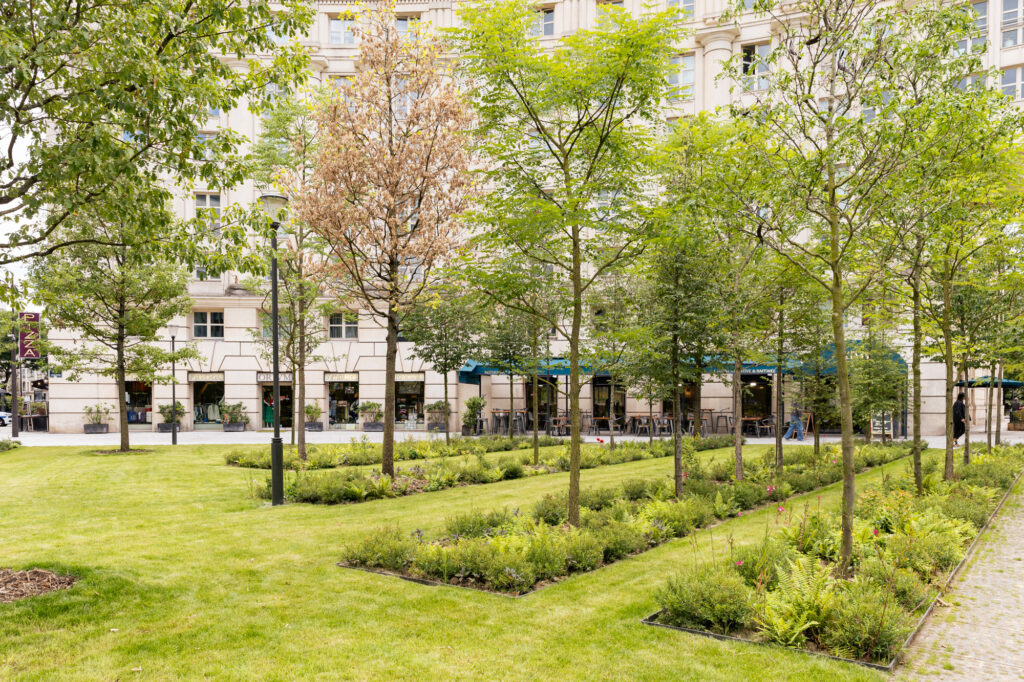
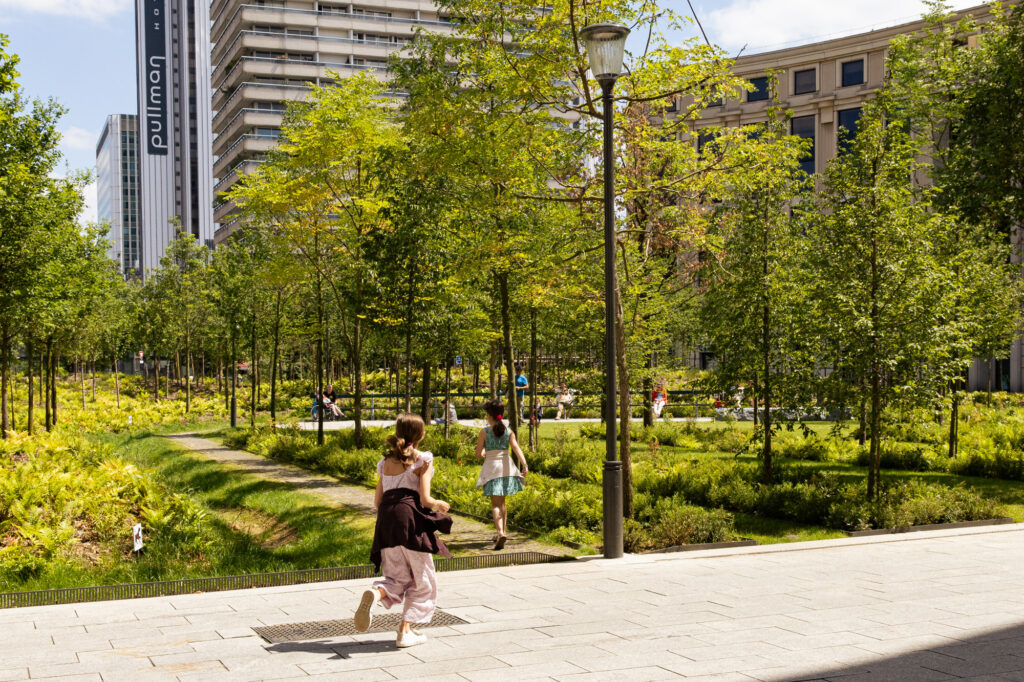
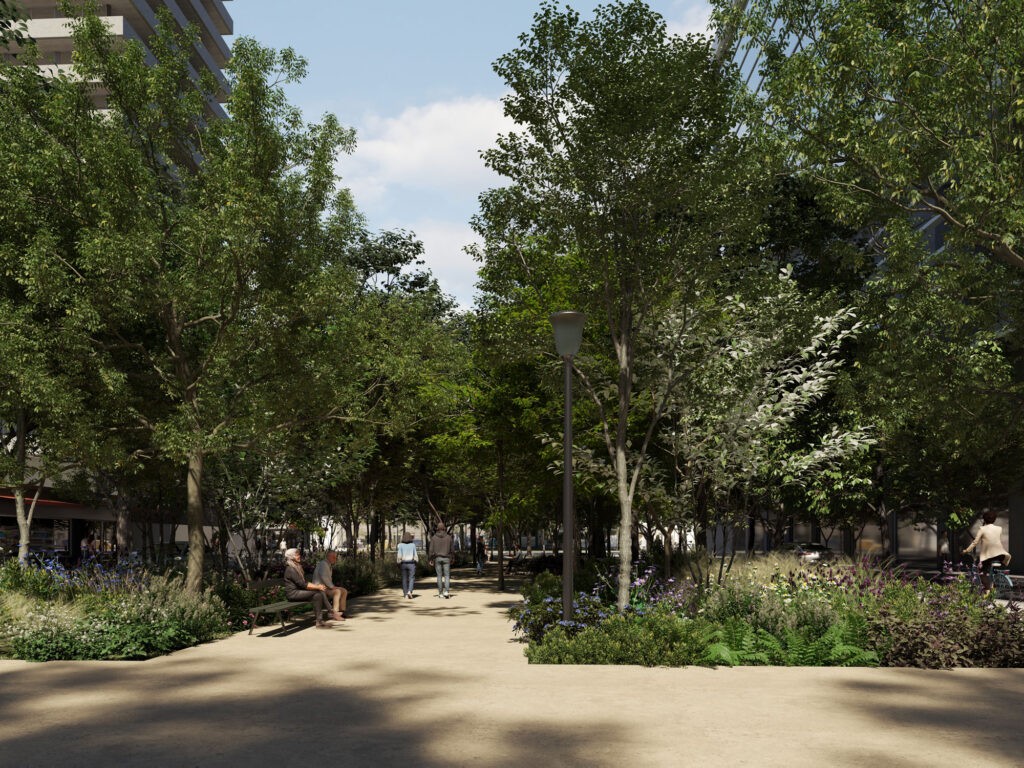
Photo credit : CL Design, Guillaume Bontemps / Ville de Paris
Several projects illustrate this transformation in practical terms.
-
Place de Catalogne: Once dominated by hard surfaces, this square in Paris’s 14th arrondissement now features 470 trees and more than 4,000 square metres of urban forest. Unsealing the ground allows rainwater to soak into the soil, while the vegetation provides shade and helps reduce the impact of extreme heat. More space has also been given back to pedestrians and active travel.
-
Oasis schoolyards: This program transforms school playgrounds once largely covered in asphalt into greener spaces, with permeable surfaces, trees and shaded areas. These improvements create a more pleasant environment for children and can help establish cool spots within neighbourhoods. Some schoolyards are also open to the public outside school hours.
-
The Hôtel de Ville forecourt: Completed in 2026, its new urban forest covers more than 2,500 square meters of green space, including around 1,000 square meters of natural ground. The aim is to provide shade and cooling in a central location while preserving its role as a gathering place.
Together, these projects show how urban greening can serve several purposes at once: supporting biodiversity, managing rainwater more effectively, reducing heat and making public spaces more welcoming. It is becoming a practical tool for climate adaptation and everyday well-being.
2. In Milan, an industrial brownfield becomes a neighbourhood to live in
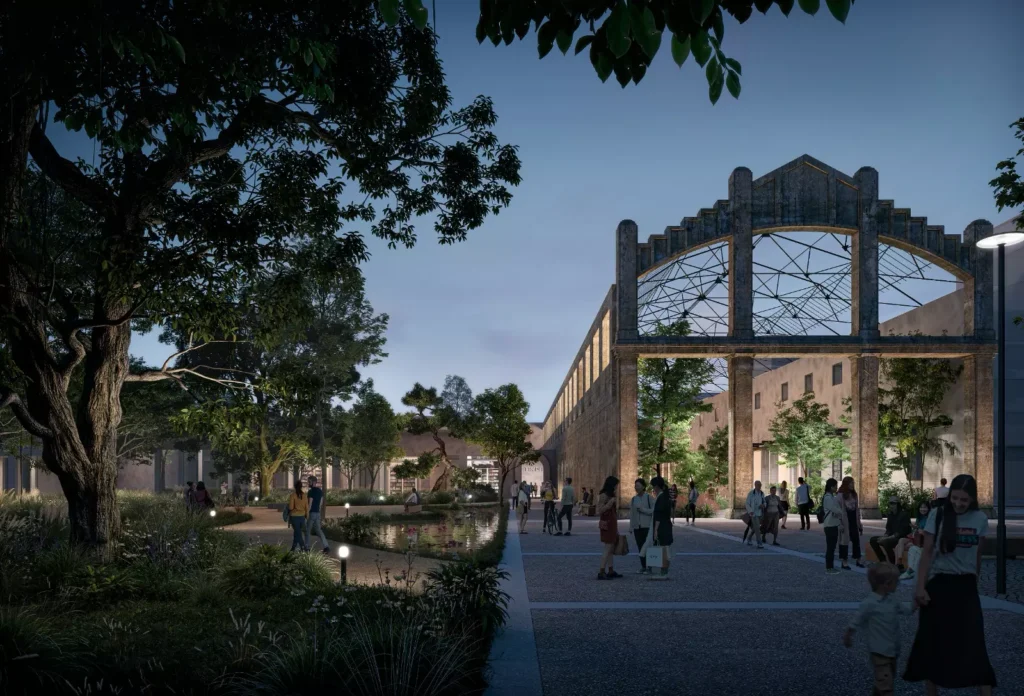
Neglected urban spaces can become places that foster inclusion and strengthen social connections. Milan’s former Macello site is one such example. Unused for several years, it is now at the centre of the ARIA Ex Macello urban regeneration project.
In September 2026, the city council adopted the implementation plan for the redevelopment. This project will create a neighbourhood combining affordable housing, a university campus, educational facilities, cultural activities and green public spaces. Around 30,000 square meters will be dedicated to green areas, squares and public pathways.
This project also includes the restoration of historic buildings and the repurposing of existing structures. Rather than expanding onto new land, Milan is reusing an already urbanized site to meet several community needs.
3. In Rome, climate action is improving residents’ lives
In Corviale, a vast public housing complex built in the 1970s on the outskirts of Rome, a 58-million-euro revitalization program funded by the European Union aims to improve the living conditions of approximately 4,500 residents. Long synonymous with neglect and disrepair, this one-kilometer-long complex has become a testing ground for a different approach to urban renewal: one that combines climate resilience and social inclusion.
The project emphasizes common spaces and public facilities rather than individual apartments. The local library has been transformed into a “bioclimatic shelter,” using recyclable materials to provide protection from the heat. At the same time, the redeveloped West Park is set to reconnect the neighborhood to the surrounding countryside through the planting of 9,500 trees and shrubs, while East Park will offer a space dedicated to sports and recreation. Public squares, public buildings, and an open-air theatre are also undergoing renovation.
What sets Corviale apart is its emphasis on climate justice: ensuring that residents of disadvantaged neighborhoods are not left behind as cities adapt to rising temperatures. As municipal architect Alessia Peghini pointed out, “A bench placed in the shade, or a new tree that will provide more shade, makes all the difference in a neighborhood where there is none.”
4. In London, more homes without sacrificing the landscape
In Croydon, south of London, the Lion Green Road project offers an interesting response to the challenge of urban densification.
Awarded the 2026 Stirling Prize, one of the most prestigious honours in British architecture, this development comprises 157 homes across five buildings. It preserves landscaped areas and creates a new connection between the neighbourhood and the surrounding green spaces.
This project demonstrates that greater density does not necessarily mean sacrificing architectural quality or access to nature. It also highlights the need to consider housing numbers, quality and integration into the neighbourhood together when tackling the housing crisis.
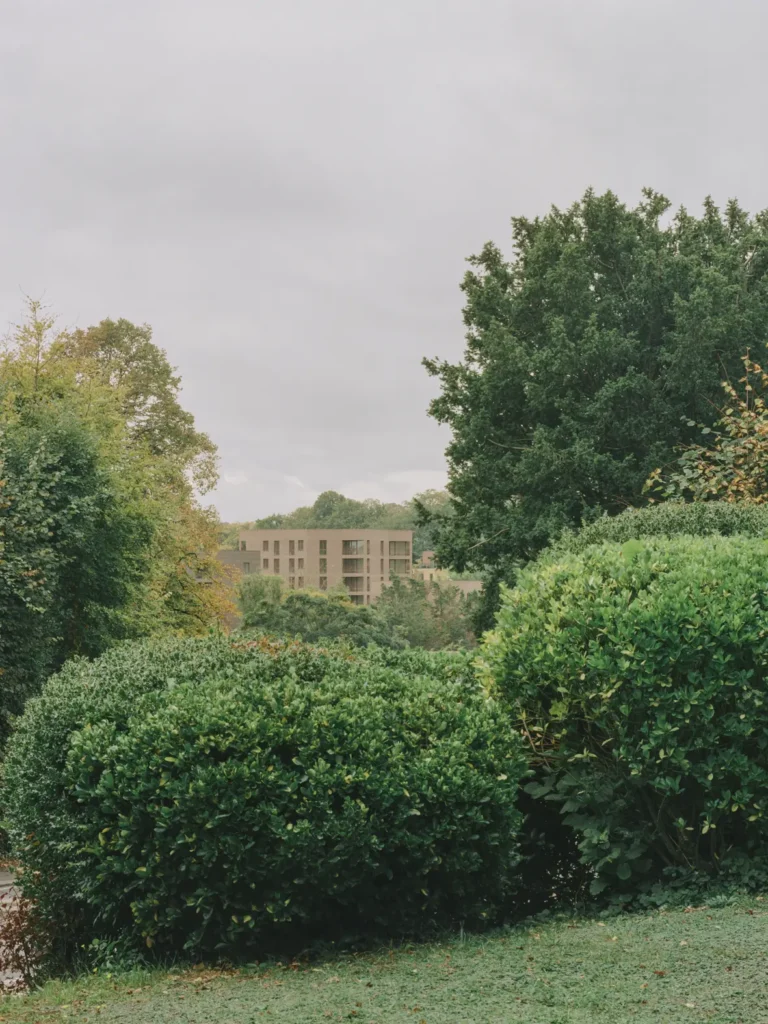
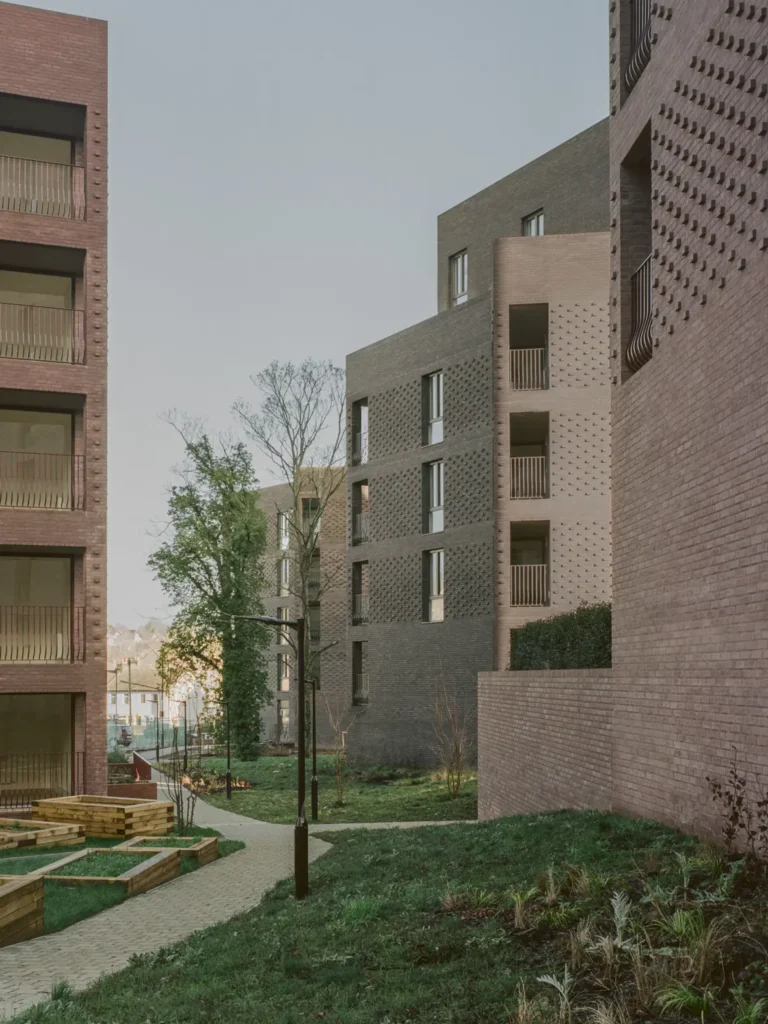
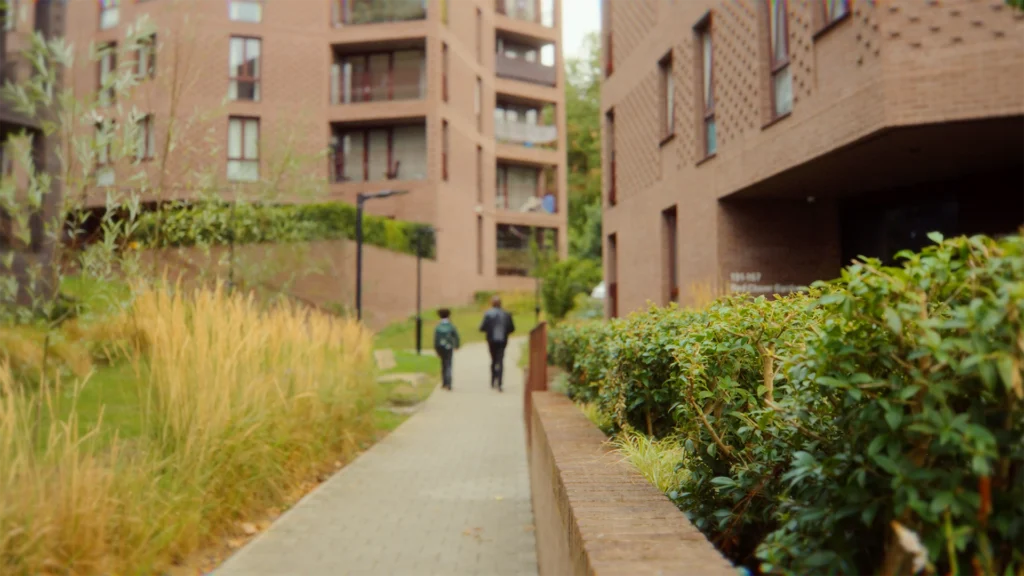
Photo credit : Lorenzo Zandri
Regenerating cities means improving quality of life
From Paris’s urban forests to Milan’s new neighbourhoods, Rome’s cooling spaces and London’s homes integrated into the landscape, these initiatives show that the transformation of our cities is already under way. They also remind us that there is no single way to address urban challenges: every place can build on its existing buildings, public spaces and the needs of its residents.
These examples reveal what becomes possible when urban planning makes greater room for nature, makes better use of existing spaces and puts people’s needs at the heart of decision-making. A city can make room for more life without necessarily expanding, better withstand extreme heat without giving up its public spaces, and create new homes while preserving places to breathe.