Photo Source: Sagrada Família
A century after the death of visionary architect Antoni Gaudí, Barcelona’s Sagrada Família is reaching one of the most symbolic milestones in its extraordinary history.
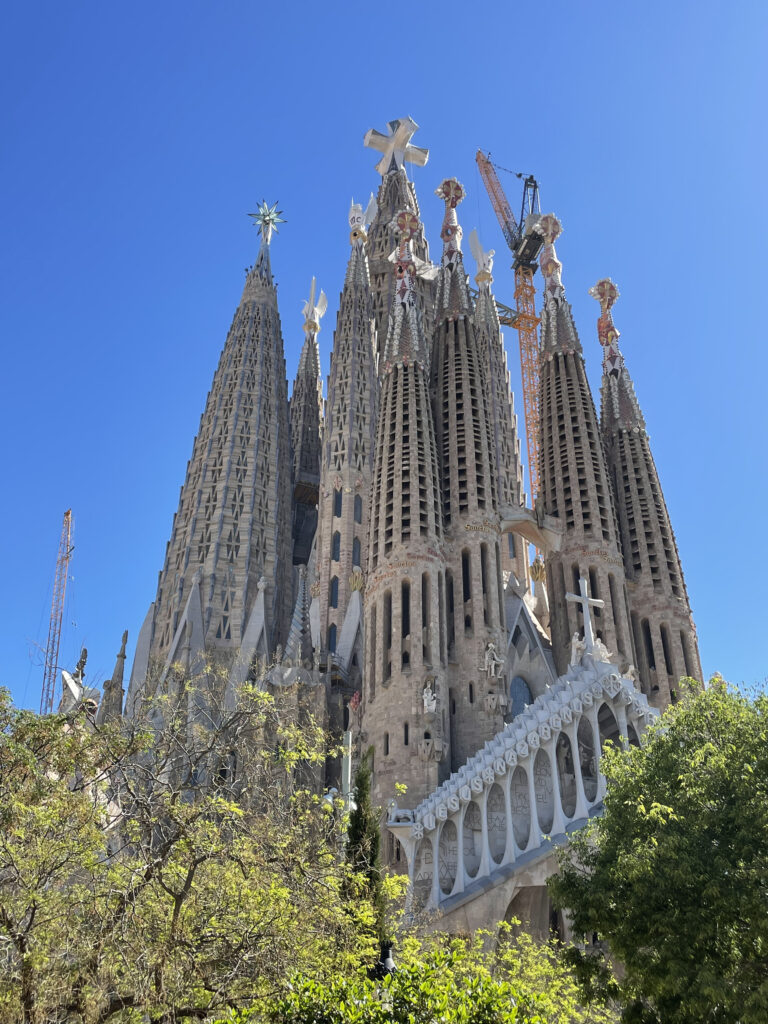
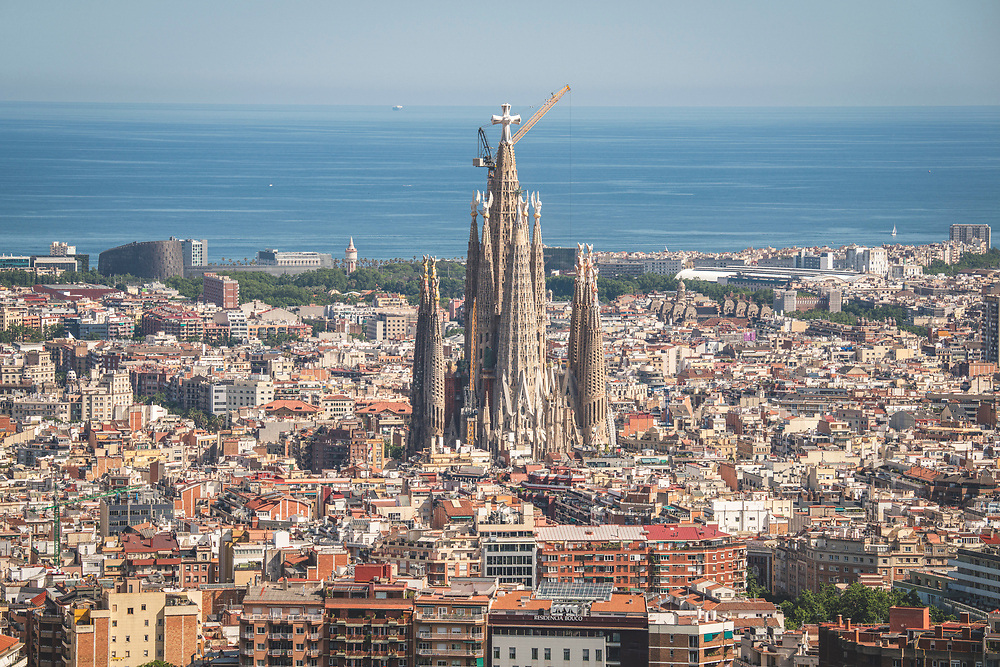
On June 10, Pope Leo XIV celebrated a special Mass in the basilica to mark the inauguration and blessing of the newly completed exterior of the central Tower of Jesus Christ, now the tallest church tower in the world at 172.5 metres. The ceremony comes exactly with the centenary of Gaudí’s death in 1926, giving the moment an almost poetic sense of culmination.
Construction of the Sagrada Família began in 1882. Gaudí devoted the final years of his life entirely to the project, fully aware he would never see it finished. “My client is not in a hurry,” he famously said, referring to God.
More than 140 years later, the basilica has become one of the world’s most recognizable architectural masterpieces, not only because of its scale, but because it seems to belong to another dimension entirely. Inspired by nature, geometry and deep spiritual symbolism, Gaudí designed the church like a living organism: columns branching like trees, light filtering through stained glass like a forest canopy, and towers rising organically toward the sky.
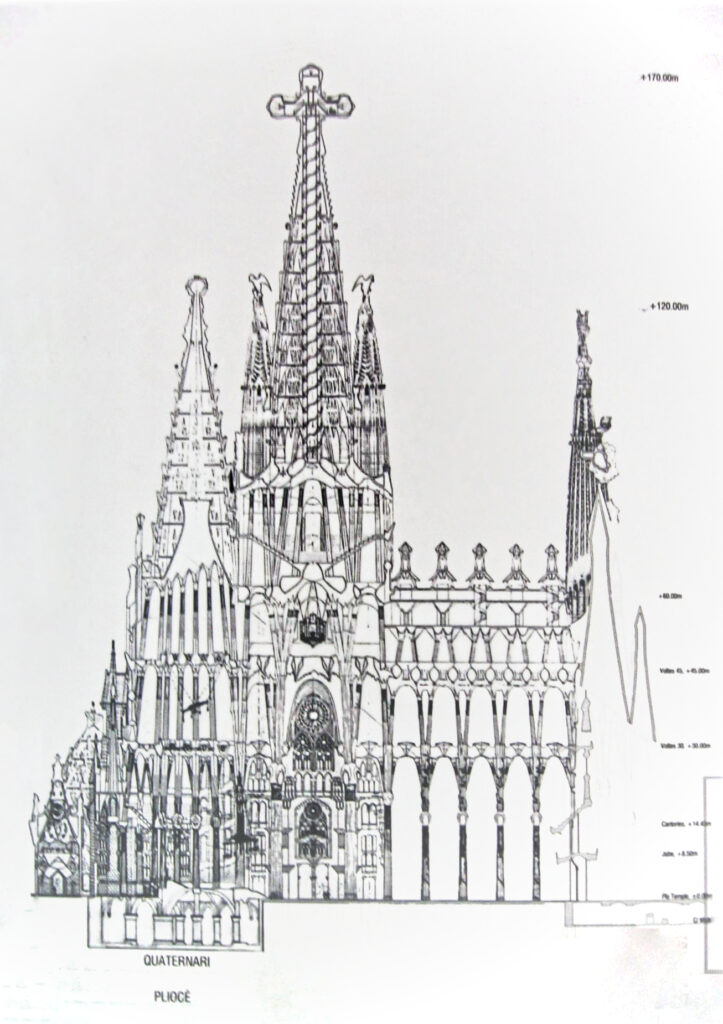
The completion of the central tower marks a major architectural achievement. Crowned by a massive illuminated cross clad in glass and white enamelled ceramic, the structure officially brings the basilica to its intended maximum height. Yet, in a detail characteristic of Gaudí’s philosophy, the tower remains slightly shorter than Barcelona’s Montjuïc hill, because, in his view, no human creation should surpass the work of nature.
The completion of the central tower also represents a remarkable engineering achievement. Much of the structure was built using prefabricated stone panels assembled with an innovative tensioned-stone system, a technique that combines traditional stone construction with modern engineering methods. The Sagrada Família is currently the only stone building in the world to use this system at such a scale, further reinforcing its status as both a historic and forward-looking architectural masterpiece.
In a way, the Sagrada Família also tells the story of architecture itself. The technologies now used to complete its towers did not exist in Gaudí’s lifetime, meaning the basilica has gradually evolved into a meeting point between centuries, where hand-carved stone, artisanal traditions and advanced engineering coexist within the same vision.
What makes the Sagrada Família especially remarkable is not simply its beauty, but indeed its timespan. Few buildings in history have been carried forward by so many generations of architects, artisans and craftsmen. Wars, political upheaval, financial crises and even a pandemic delayed its progress, yet the vision endured.
In many ways, the basilica has become more than a church. It is a monument to patience, collective creativity and long-term thinking in an era often defined by speed and immediacy.
A hundred years after Gaudí’s death, the Sagrada Família still feels unfinished in spirit, not only because construction continues, but because it continues to inspire wonder.