
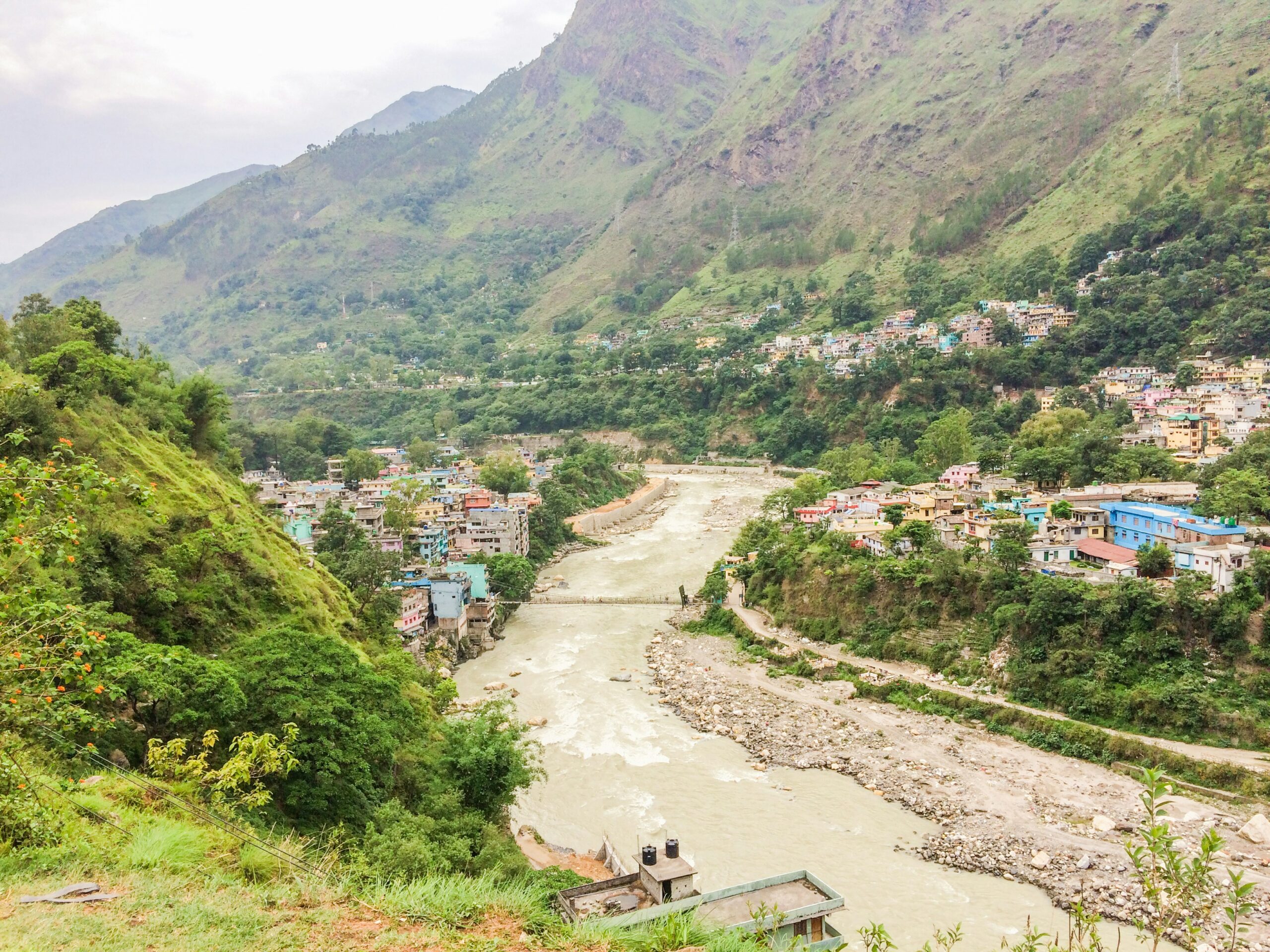
On 4 September, nine days after a catastrophic flood swept through Nepal’s Trishuli River valley, rescuers searching a mud-filled tunnel heard something they had desperately been waiting for: a human voice.
Following the sound, rescuers pulled two workers, Sanjay Sah and Kabir Maharjan, from the underground structures of the Upper Trishuli 3A hydropower station. Images released by the Nepali Army showed one man being carried out on a rescuer’s back, his face covered in mud, while soldiers and emergency workers gathered around him. The two were then flown to an army hospital in Kathmandu.
This moment of hope came amid a disaster, whose precise chain of causes is still being investigated. On 26 August, a huge collapse of rock and glacial ice high in the Himalayas formed a temporary dam in a river, which later released water, mud and debris surging downstream, devastating communities along the Nepal–Tibet border. At the time of writing, at least 1,399 people had been reported killed across Nepal and Tibet and more than 5,400 remained missing. Around 900 people associated with hydropower projects were still unaccounted for.
Reaching Sah and Maharjan was an extraordinary operation. Rescuers had to determine which underground passage could provide access, clear enormous rocks – sometimes using controlled explosions – and drain water from flooded sections. Teams then worked through mud and sludge while facing the possibility that further water could enter the tunnels, putting the rescuers themselves at serious risk. Their efforts have been called a “triumph for humans and humanity” and “one of the great rescues of the 21st century”. The successful rescue of the two workers has given the rescue teams hope to continue working in incredibly challenging and life-threatening circumstances to save more workers who may still be trapped underground.
There was also courage on both sides of the rescue. More than 270 people have already been rescued from various hydropower projects. Some of these had endured more than a week underground, praying, reciting mantras, or attempting to do something to save themselves. Some also risked their own lives to save others. When the flood warning arrived, Sah, the mechanical foreman rescued alongside Maharjan, remained in the control room to help colleagues escape rather than immediately fleeing himself. His decision to save others left him trapped underground.
The rescuers are still searching. The day after saving Sah and Maharjan, Chinese worker Lu Haitao was carried alive from a 225-metre hydropower tunnel at the separate Upper Trishuli-1 project after ten days underground. Elsewhere, emergency workers also found a woman alive in a house buried by the floods. Broader operations have brought together Nepali soldiers, police and specialist rescue teams from several countries.
The successful rescues do not lessen the immense loss of human life. Yet the unlikely story of Sah, Maharjan, and Haitao’s rescue, amongst others, reminds us of the extraordinary efforts of emergency workers around the world: they enter unstable buildings, flooded tunnels, fires and wreckage, risking their own lives, sometimes without even knowing whether anyone remains to be saved. Even after days of desperate work, their persistence can make the difference between somebody remaining missing or passing away and somebody coming home and being given a second lease on life.