
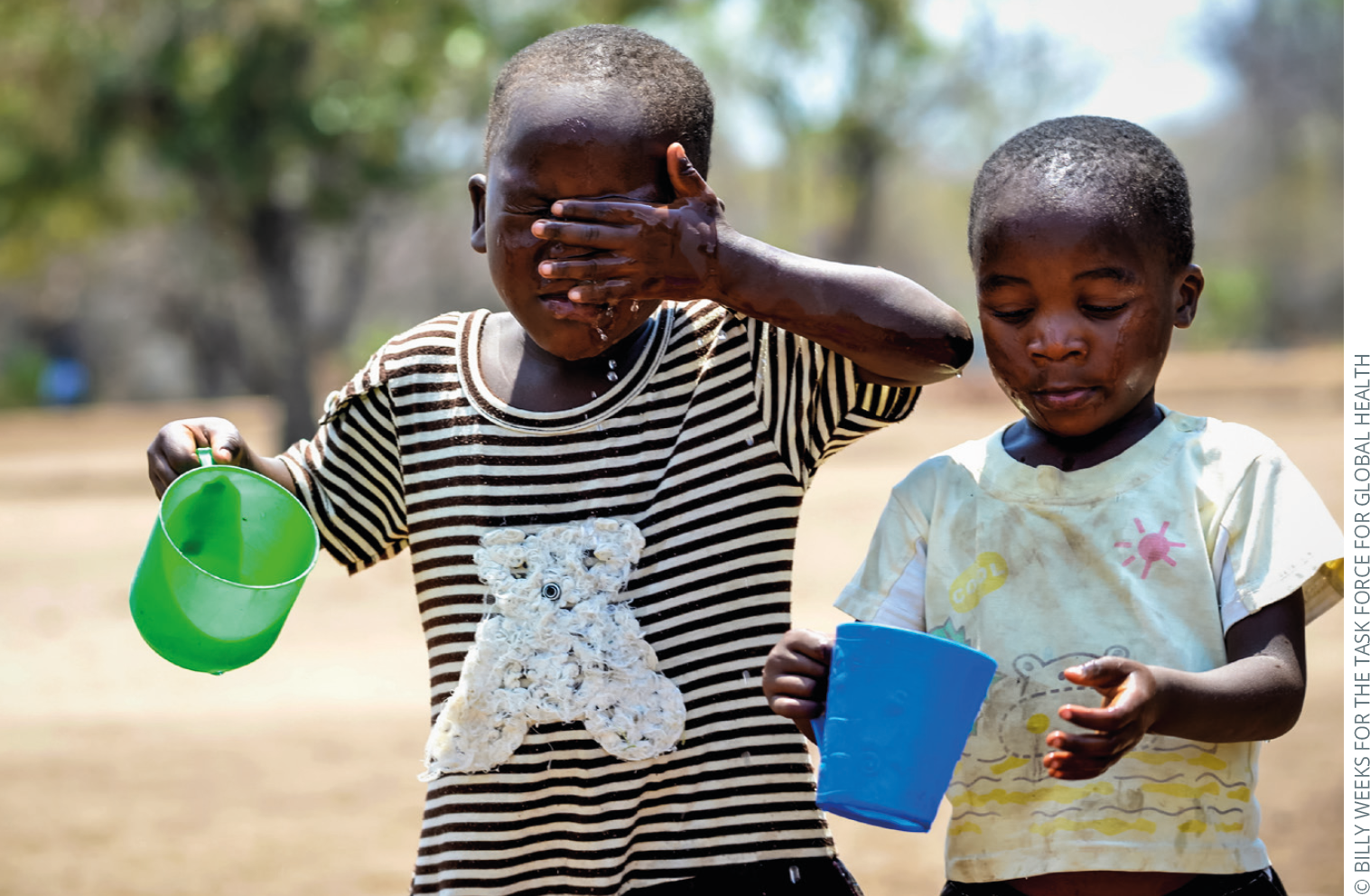
Facial cleanliness helps prevent the spread of trachoma. CC BY-NC-ND 4.0.
On September 3, 2026, the World Health Organization (WHO) officially validated Timor-Leste, a small island country between Indonesia and Australia, as having eliminated trachoma as a public health problem. This historic announcement closed the final gap in WHO’s South-East Asia Region, completing a decades-long effort against the disease.
Considered the leading infectious cause of blindness in the world, trachoma usually spreads through contaminated hands, objects and flies. The disease is most common in poorer communities with limited access to clean water and healthcare. Repeated infections can gradually scar the inside of the eyelid, causing the eyelashes to turn inward and scrape against the eye. Controlling this disease depends primarily on good hygiene, clean water, proper sanitation, antibiotics, and medical treatment.
“The elimination of trachoma from the South-East Asia Region is a significant step towards our global target of eliminating trachoma worldwide by 2030,” said WHO Director-General Dr. Tedros Adhanom Ghebreyesus. “[Timor-Leste] has shown how science and strong health systems can protect people from preventable blindness,” he added.
Such an achievement was built over decades in Asian countries where trachoma had been firmly established. Around 2000, Nepal’s most severely affected areas had active trachoma rates of 16% to 35% among children aged ten or younger. India launched a national control project in 1963, while Nepal established its own program in 2002. Both countries combined antibiotics and surgery with health education and improvements in water, hygiene and sanitation. Eventually, Nepal received WHO validation in 2018, followed by Myanmar in 2020 and India in 2024.
Timor-Leste was the last country in the region where trachoma was still suspected to be endemic, although its status remained uncertain. Between 2015 and 2017, health teams examined children on Atauro Island, screened patients at eye clinics and conducted targeted house-to-house searches. In 2025, researchers analyzed 4,949 samples from children aged one to five across all 13 municipalities and found no evidence of transmission at a level requiring a specific trachoma-control program. The country also confirmed that its health system could detect and manage any cases that might emerge in the future. “Timor-Leste has once again demonstrated that strong national leadership, high-quality evidence and integrated health services can deliver lasting public health gains,” said Dr. Nilesh Buddha, Officer-in-Charge at the WHO South-East Asia Regional Office.
Eliminating trachoma as a public health problem does not necessarily mean that the disease has completely disappeared. Individual cases may still occur. However, this validation confirms that trachoma no longer meets WHO’s criteria for a public health problem. Nearly two billion people benefit from this milestone built on decades of sustained public-health efforts, which offers a glimmer of hope in the fight against other infectious diseases.