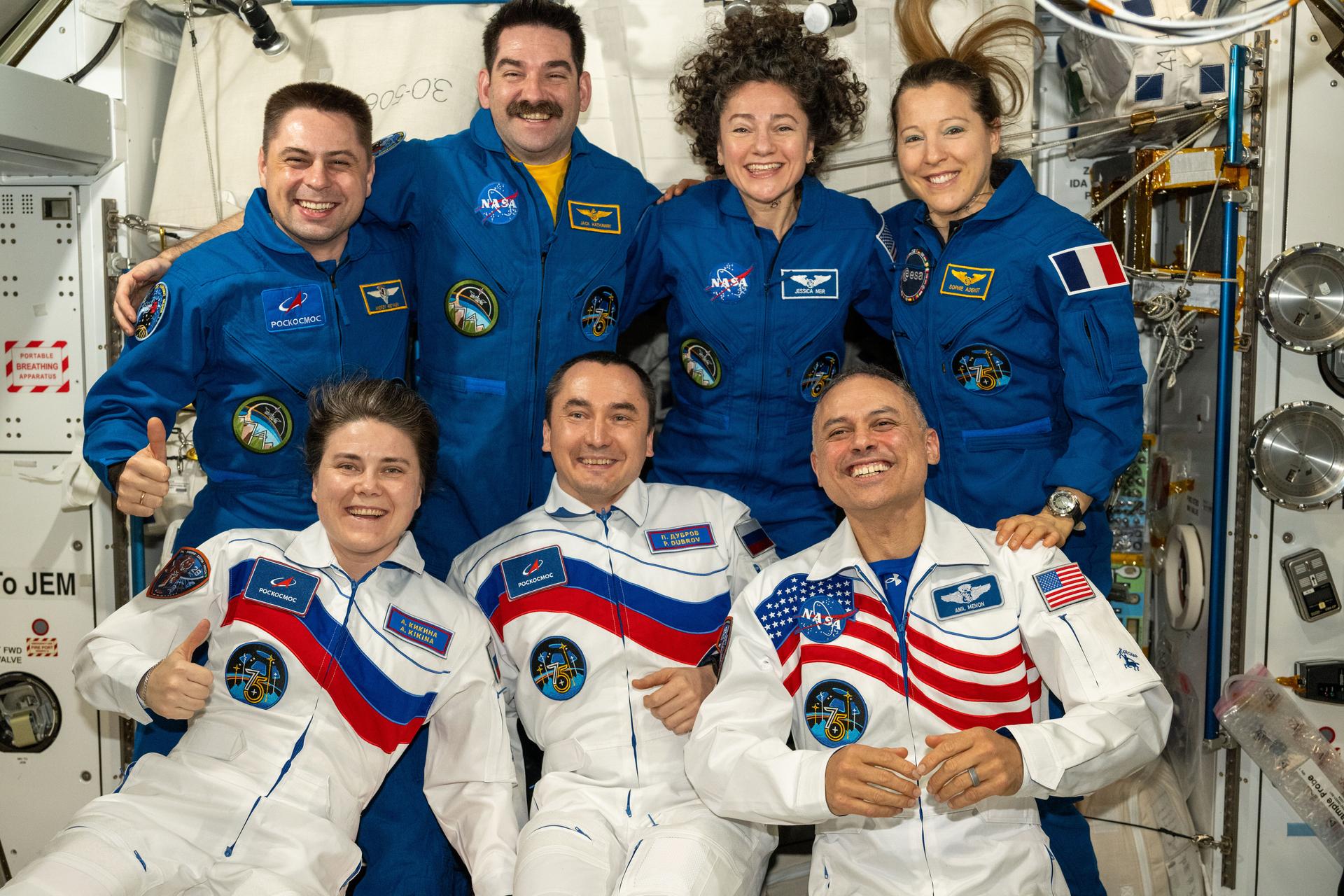
Expedition 75 crew members aboard the International Space Station, October 2, 2026. Photo: NASA.
World Science Day for Peace and Development 2026
On November 10, UNESCO marks World Science Day for Peace and Development, an annual observance highlighting the role of science in society. This year’s theme, “Common Ground Through Science Diplomacy,” focuses on how scientific cooperation can bring nations together, even in times of political tension.
To mark the occasion, The Uplift explores remarkable examples of science diplomacy, from research institutions established in the aftermath of World War II to initiatives bringing together countries divided by ongoing conflicts.
In the Aftermath of War
Scientific collaborations between researchers from different countries have a long history. In the twentieth century, for example, twelve European countries came together in 1954 to establish the European Organization for Nuclear Research, better known as CERN. At a time when Europe was rebuilding its infrastructure and relationships between nations, CERN emerged from a vision that scientific cooperation could contribute to peace and reconciliation.
What began as a European initiative grew into a leading international research centre, bringing together scientists to investigate the fundamental nature of matter and the universe. From the outset, CERN’s founding convention excluded military research and required scientific findings to be made publicly available. These principles helped create a space where researchers could cooperate across political divisions, including during the Cold War.
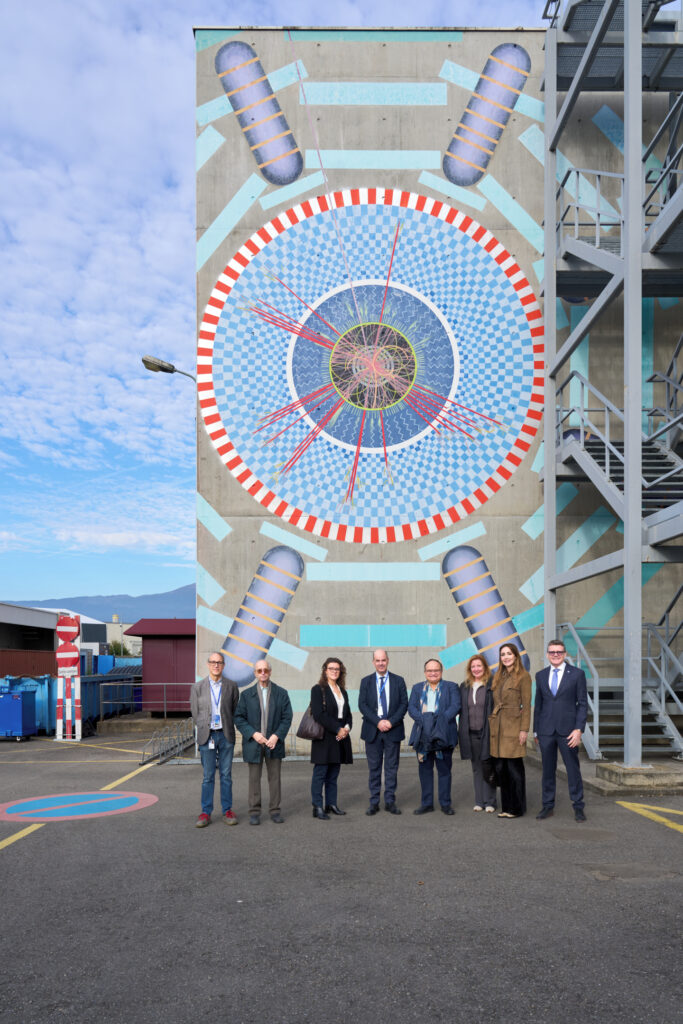
Official visit to CERN on October 16, 2026. Photograph by Marina Cavazza / CERN. Reference: CERN-PHOTO-202610-279-1.
A similar spirit emerged between the United States and the Soviet Union in 1985, when the two countries initiated discussions that would eventually lead to ITER, an international project dedicated to fusion energy research.
Today, seven members – the European Union, China, India, Japan, South Korea, Russia, and the United States – are working together to construct an experimental fusion reactor in southern France. By combining expertise, engineering capabilities, and financial resources, they aim to demonstrate the scientific and technical feasibility of fusion energy, which could eventually pave the way towards future low-carbon power generation.
Although ITER remains under construction, its development reflects decades of international commitment.
International cooperation has also played a central role in space exploration. Developed through a partnership involving the United States, Russia, Canada, Japan, and participating European nations, the International Space Station (ISS) has maintained a continuous human presence in orbit since November 2000.
For more than twenty-five years, astronauts and researchers from different countries have lived and worked aboard a shared laboratory, conducting experiments in medicine, biology, physics, and other disciplines. Its operation depends on international coordination, with partners contributing essential systems, equipment, transportation, and scientific expertise. Even during periods of geopolitical tension on Earth, this partnership has continued to support research and human activity in space.
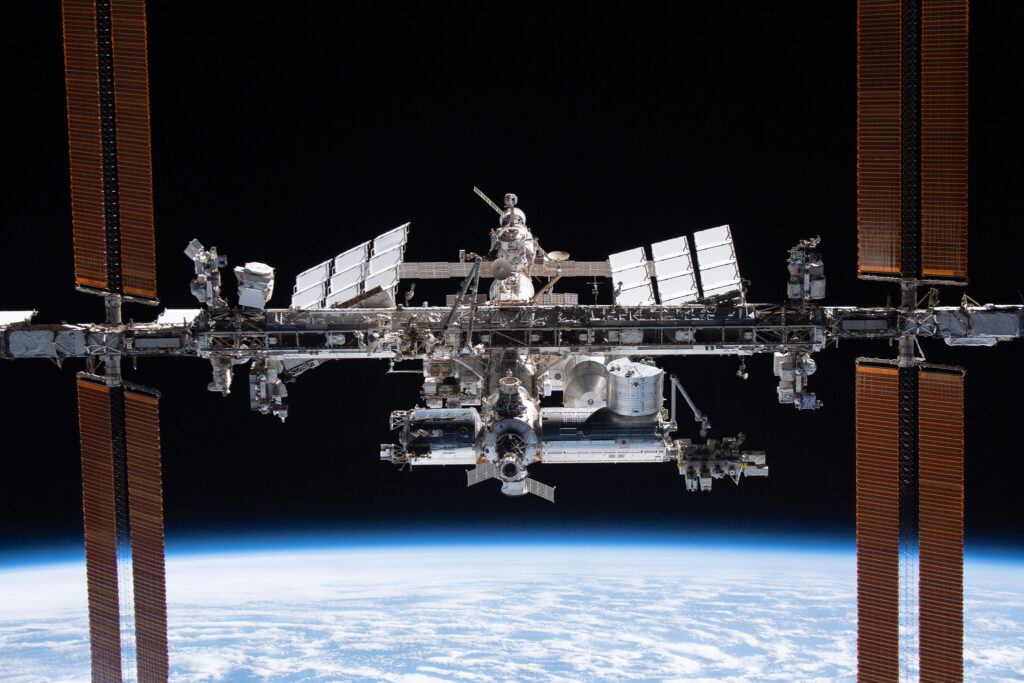
There is something meaningful about this collaboration taking place hundreds of kilometres above our planet. From that perspective, national borders disappear from view, leaving the image of a shared world and reminding us of the humanity we have in common.
NASA photograph of the International Space Station taken from SpaceX Crew Dragon Endeavour on November 8, 2021. NASA Johnson / Flickr (CC BY-NC-ND 2.0)
Science Diplomacy Amid Political Divisions
The previous examples illustrate how scientific cooperation can bring nations together despite political differences. But what happens when these divisions are particularly deep and persistent?
In the Middle East, where conflicts continue to shape relations between nations, scientific collaboration offers a different meaning.
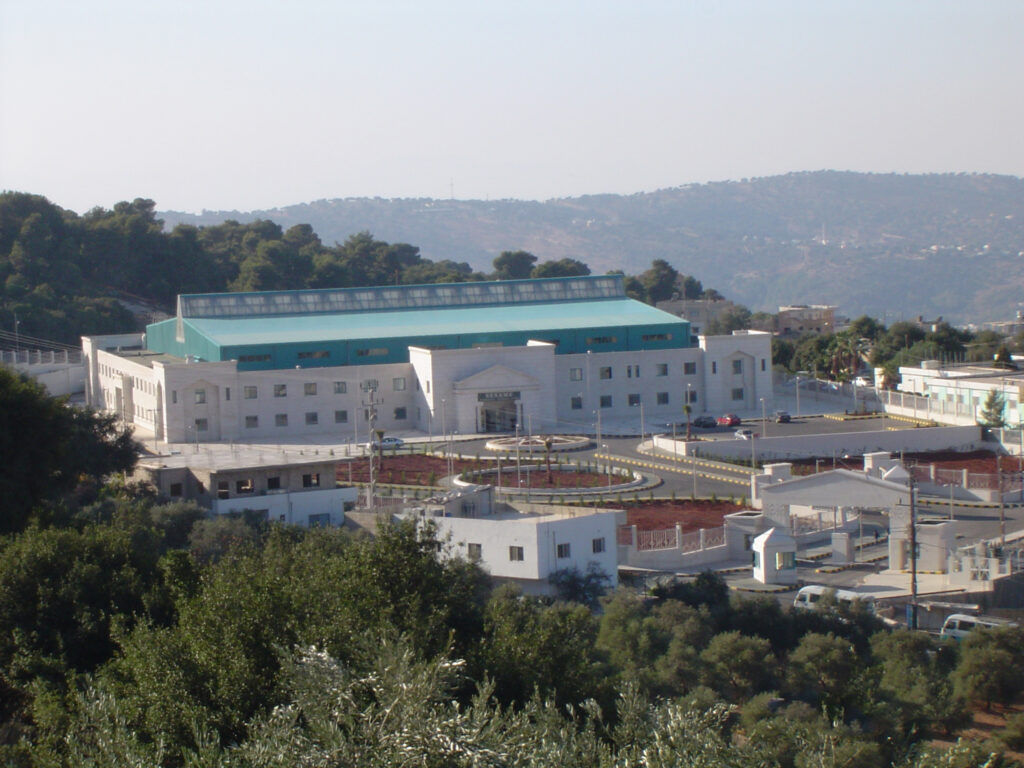
Inaugurated in Jordan in 2017, SESAME (Synchrotron-light for Experimental Science and Applications in the Middle East) brings together members including Iran, Israel, Palestine, Egypt, Jordan, Türkiye, Cyprus, and Pakistan.
The SESAME research laboratory in Jordan.
Photo: SESAME Media / CERN.
Using synchrotron light, powerful beams that allow scientists to examine the structure and properties of materials in exceptional detail, scientists investigate materials and biological structures, supporting research in medicine, environmental science, archaeology, and other fields.
SESAME’s significance extends beyond its research capabilities. The institution provides scientists from countries with strained political relationships an opportunity to pursue common goals. Despite profound political disagreements between some of its members, it provides opportunities for scientists from across the region to exchange knowledge and develop professional relationships that might otherwise be difficult to establish. Even where divisions persist, SESAME shows that people can find common ground through shared purpose, mutual respect, and a willingness to work together.
To Support Peace
Scientific cooperation can also play a more direct role in easing tensions between communities. In Georgia, where the 2008 war left lasting divisions around South Ossetia, a breakaway region internationally recognised as part of Georgia, access to water has become an opportunity for cooperation.
Communities on both sides of the dividing line depend on shared water resources for agriculture and everyday life. Despite political tensions, a common need has encouraged dialogue supported by scientific measurements and technical expertise.
Through the Ergneti Incident Prevention and Response Mechanism, facilitated by the Organization for Security and Co-operation in Europe (OSCE) and the European Union Monitoring Mission in Georgia (EUMM), water management has become an area of practical collaboration. The EUMM monitors water volumes and flows at strategic locations, sharing this data with both parties to support discussions on irrigation and access to water.
In an article published on October 15, 2026, the United Nations reported that this cooperation had helped reduce local tensions and improve water access for communities on both sides.
While the broader political conflict remains unresolved, the UN’s account suggests that sharing reliable scientific data can help build trust where political agreement is difficult. By giving both sides a clearer understanding of an essential resource, technical cooperation has helped ease tensions and improve everyday life.
Science for a Shared Planet
Beyond fostering dialogue and supporting peace, scientific partnerships also demonstrate what countries can achieve when addressing shared challenges.
One example is the Montreal Protocol, adopted in 1987 in response to scientific discoveries about the depletion of Earth’s ozone layer. Through decades of coordinated international action, approximately 99 per cent of controlled ozone-depleting substances have been phased out globally, putting the ozone layer on a path towards recovery.
As explored by The Uplift in The Ozone Layer: One of the Greatest Environmental Success Stories of Our Time, this achievement shows how nations can unify their forces and strategies to pursue a common environmental goal, working together to protect the planet as a whole, on which we all depend.
A Sense of Unity
These examples demonstrate how science diplomacy can create opportunities for cooperation, even when nations disagree on fundamental political questions. Whether through international research institutions, environmental agreements, or cooperation over shared resources, science creates opportunities for dialogue and progress.
Perhaps the most valuable lesson lies not only in what these collaborations achieve, but in the qualities they require: pragmatism, perseverance, mutual support, and a willingness to work alongside others towards a shared goal. They show that cooperation does not require people to share the same beliefs or political convictions. Rather, by choosing to work together despite their differences, they can build connections and find a sense of unity through a common purpose.
And perhaps the same qualities that allow nations to build bridges through science can inspire the way we approach one another in everyday life.
Because a more peaceful world begins with a sense of unity, one that grows not only from shared ambitions, but also from the simple recognition that, beyond our differences, there is much that connects us.