On June 5, World Environment Day will be hosted in Baku, Azerbaijan. The United Nations Environment Programme has chosen the theme “Inspired by Nature. For Climate. For Our Future.” Behind this slogan lies a shift in direction: after decades of trying to repair the damage, the question is no longer just how to protect nature, but how to draw inspiration from it to rethink the ways we build, care for ourselves, and design our cities. It is a shift that is already quietly taking place.
Biomimicry is Gaining Momentum
Biomimicry – the practice of imitating the strategies, structures, and mechanisms developed by living organisms over the course of evolution to solve human problems – is no longer just a concept. It is now permeating every sector: architecture, aeronautics, medicine, materials, energy, and more.

In 2025, the Biomimicry Institute published a report on ten major innovations that illustrate the breadth of the field: microplastic filters inspired by the roots of aquatic plants, capable of trapping 98% of particles without additional energy; a surgical adhesive modeled on the biochemistry of slugs, flexible and strong enough to suture moving internal tissues; a medical tool whose micro-teeth mimic those of a boa constrictor to extract brain clots in a single manoeuvre, reducing the risk of stroke. In aviation, Lufthansa Technik’s AeroSHARK film, whose micro-ribs replicate shark skin, is now deployed on entire fleets of Boeing 777s; an innovation that can save up to 250 tons of fuel and 800 metric tons of CO2 per aircraft per year. In architecture, a study published in 2025 in Sustainability identifies a new generation of plant-inspired buildings – self-shading structures, passive ventilation modeled on termite mounds, and facades that capture moisture like cactus leaves.
What is changing in 2025–2026 is the scale. Biomimicry is no longer a laboratory curiosity: it is making its way into industrial specifications, urban planning, and public policy. A scientific publication from December 2025 calls for its formal integration into national climate commitments (NDCs), alongside renewable energy. Amanda Sturgeon, director of the Biomimicry Institute, sums up the shift: “Nature-inspired innovation is not a niche approach – it is a path toward regenerative system change.”
The Return of Nature to Cities
Alongside this technological revolution, another phenomenon is gaining momentum: the renaturation of cities. Long viewed as spaces impervious to life, cities around the world are now making increasing room for nature – out of necessity as much as by choice.
In France, hundreds of schoolyards are losing their asphalt surfaces. The Cours Oasis project, launched in Paris in 2017 and supported by European funds, has been replicated across the country: concrete spaces converted into green oases of coolness, designed in collaboration with students. In September 2025, Paris announced plans to green a further 200 schoolyards by 2027. In Nantes, 30% of the city’s schools were set to have their asphalt removed by 2026. The logic is simple and well-documented: a green schoolyard is up to 5°C cooler than a concrete space – a climate infrastructure in its own right, made all the more urgent by the fact that in May 2026, thirteen students fell ill at a school in the Pyrénées-Atlantiques due to the heat.
This movement extends far beyond France’s borders and is part of the growing trend toward nature-based solutions, which now combine ecosystem restoration, climate adaptation, and regional resilience: In Bristol, seven abandoned urban alleys have been transformed into pollinator corridors, planted with native wildflowers. In London, beavers have been reintroduced to the Ealing wetlands—their natural dams improve flood management downstream.
In Seoul, the Cheonggyecheon River, buried under a highway for half a century, has been uncovered and restored: it now flows through the city center as a six-kilometer-long green lung. Singapore has made urban biodiversity a matter of state policy, with its Nature Ways – ecological corridors that connect parks and nature reserves across the city. In Dublin, 80% of green spaces are now certified “pollinator-friendly,” following a policy to reduce mowing and herbicide use in municipal parks.
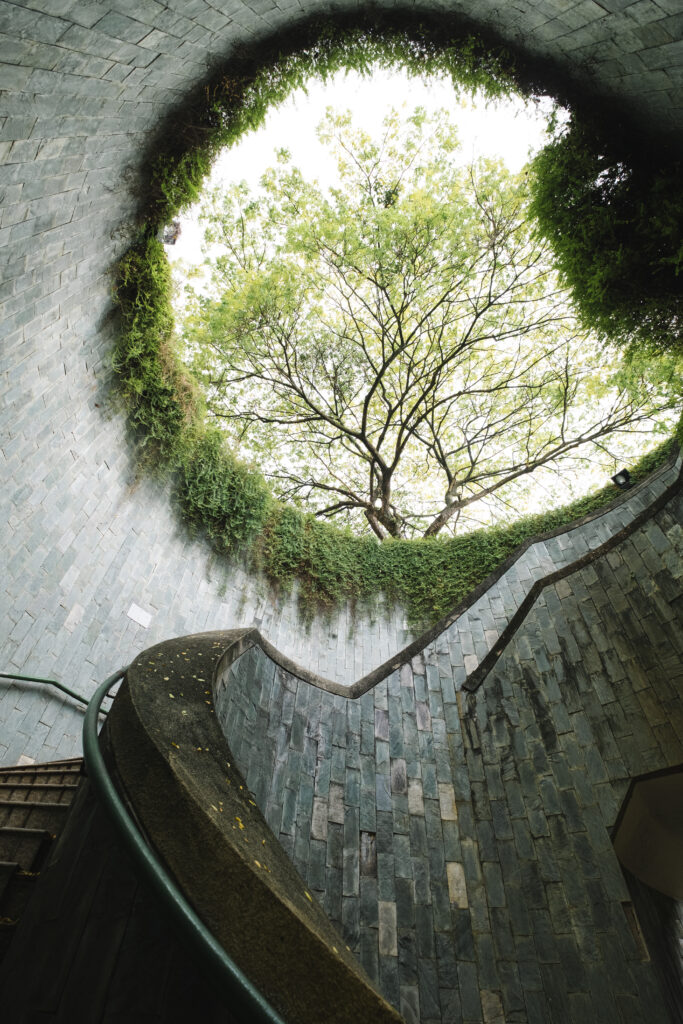
This return of nature to the city is not limited to insects or plants. As we explored in a recent article, bees – both wild and domesticated – now find a greater diversity of flowers in cities than in rural areas dominated by monocultures. Rooftop apiaries, flower-filled meadows along railroad tracks, green roofs: the city is gradually rewilding, and with it comes the return of the food chain on which our own food supply depends.
What Indigenous Peoples Have Known for Millennia
There is a certain irony in the fact that World Environment Day 2026 places inspiration from nature at the heart of its message. This is precisely what communities – long ignored by much of the wider world – have been practicing for centuries.
As noted in a UNESCO Courier article published in January 2026, as the climate crisis intensifies, “the world is turning to the knowledge systems it once dismissed.” Indeed, according to the United Nations, Indigenous peoples account for less than 5% of the world’s population, yet they manage lands that are home to approximately 80% of the planet’s remaining biodiversity. From their close connection with the natural world around them, they have drawn valuable knowledge that deserves wider recognition.
In West Africa, the zaï technique – hand-dug micro-pits in degraded soil designed to concentrate water and nutrients – is helping to regenerate land that conventional agriculture had abandoned. A study in Scientific Reports (2025) reveals that 92% of farmers surveyed in South Africa use traditional plant-based practices to manage pests. On the Klamath River in California, the Karuk and Yurok tribes secured the demolition in 2024 of four hydroelectric dams that had blocked salmon migration for a century. A year later, scientists observed the spontaneous return of 7,700 fish within a few months, the near-complete disappearance of toxic cyanobacteria, and the restoration of natural water temperatures.
Institutional recognition is following, albeit slowly. UNESCO’s Hangzhou Strategic Plan 2026–2035 now formally incorporates Indigenous ecological knowledge into the governance of the world’s 759 biosphere reserves. Within the IPCC, references to this knowledge have more than tripled between the Fifth and Sixth Assessment Reports. This is a strong signal that the idea that centuries of careful observation of living organisms constitute a form of scientific data in their own right is beginning to take hold.
The theme of World Environment Day 2026 – learning from nature – is therefore not just a metaphor. It is a method already being put into practice in laboratories, schoolyards, rivers, and forests around the world. Behind biomimicry, urban renaturation, and the promotion of Indigenous knowledge lies a common logic: that of nature-based solutions, increasingly viewed as resilience infrastructure on a par with energy, water, and transport infrastructure.
The movement is also reaching the next generation: the Earth Prize 2026, the world’s largest environmental competition for 13- to 19-year-olds, has just honored seven high school student teams whose projects all seem to have started with the same choice – asking nature how to proceed. An 18-year-old Irish student developed a biodegradable plastic containing enzymes capable of breaking down existing microplastics in soil and water. Three 16-year-old students from India invented a tamarind seed powder that binds microplastics together so they can be extracted with a magnet, without electricity. A 17-year-old student from Puerto Rico is transforming the Sargassum seaweed that is invading her beaches into biodegradable fabric. Each received $12,500 to move from concept to actual implementation.
Ultimately, nature is doing what it has always done: it adapts, regenerates, and finds solutions. The difference is that now, we are taking notes!