Whether you live in Europe—or have family or friends there—you have probably heard about it: over the past few weeks, heatwaves have hit much of the continent, with France and Spain experiencing some of the highest temperatures. During such hot periods, impacts on daily life can be particularly important, making even simple activities challenging. While these impacts are often widely covered by the media, many European cities are already investing in longer-term ways to protect their residents. This article explores some of the most inspiring and practical solutions being implemented to reduce heat-related risks, as reported recently in major newspapers.
Cooling Buildings from Below
To respond to the heatwaves, Paris is expanding a district cooling network that already runs through 120 kilometres of underground pipes. Developed from the 1990s and now operated by Fraîcheur de Paris, this remarkably simple system has been described by The Guardian as a “kind of miracle solution”. Cold water from the Seine is passed through a heat exchanger beside a separate circuit carrying warmer water from the city’s buildings. Through a heat exchanger, heat is then transferred from the warmer water to the colder river water without the two circuits ever mixing.
As The Guardian explains, “It is similar to holding a cup of hot tea in a bowl of cold water: the liquids never touch, but the tea still cools down”. From this system, cool water can be supplied continuously to connected buildings, while water from the Seine is returned to the river only slightly warmer than before. Currently being expanded, the network is expected to triple in size by 2042. Once completed, the system should serve all of Paris’s arrondissements and cool more than 3,000 buildings, including hospitals, schools and retirement homes.
Bringing Nature Back into Cities
It is no secret: during heatwaves, and because of dense buildings, paved surfaces and limited vegetation, cities become significantly hotter than the surrounding countryside, a phenomenon known as the urban heat island effect. With that in mind, why not give nature its place back in our cities? This is the idea European cities are now putting into practice. A perfect example is Rome, where Reuters reported thousands of trees are being planted as part of a large-scale regeneration project designed to cool some of the city’s hottest neighborhoods. Located in the Corviale district, this project plans to plant up to 9,500 trees and shrubs while redesigning green spaces to reconnect the neighborhood with the countryside.
Before Rome, other European cities had already adopted a similar approach. In 2025, the European Commission highlighted the LIFE LUNGS project in Lisbon for its efforts to cool the city through urban greening. As part of this initiative, more than 110,000 trees and shrubs have been planted alongside new meadows and water-saving initiatives, helping to provide more shade and strengthen Lisbon’s resilience to heat, drought and flooding.
A 2021 study based on satellite temperature data has already demonstrated the cooling benefits of urban vegetation. Examining nearly 300 European cities, the researchers found that the land-surface temperature in tree-covered areas was 8–12°C cooler than densely built-up areas in central Europe during extreme heat. Green roofs and other nature-based solutions have shown similar cooling effects.
Did you know?
Trees act like natural air conditioners. Beyond providing shade, they release water vapor through their leaves in a process called evapotranspiration. As this water evaporates, it absorbs heat from the surrounding air, helping cool entire neighborhoods.
Creating Shade
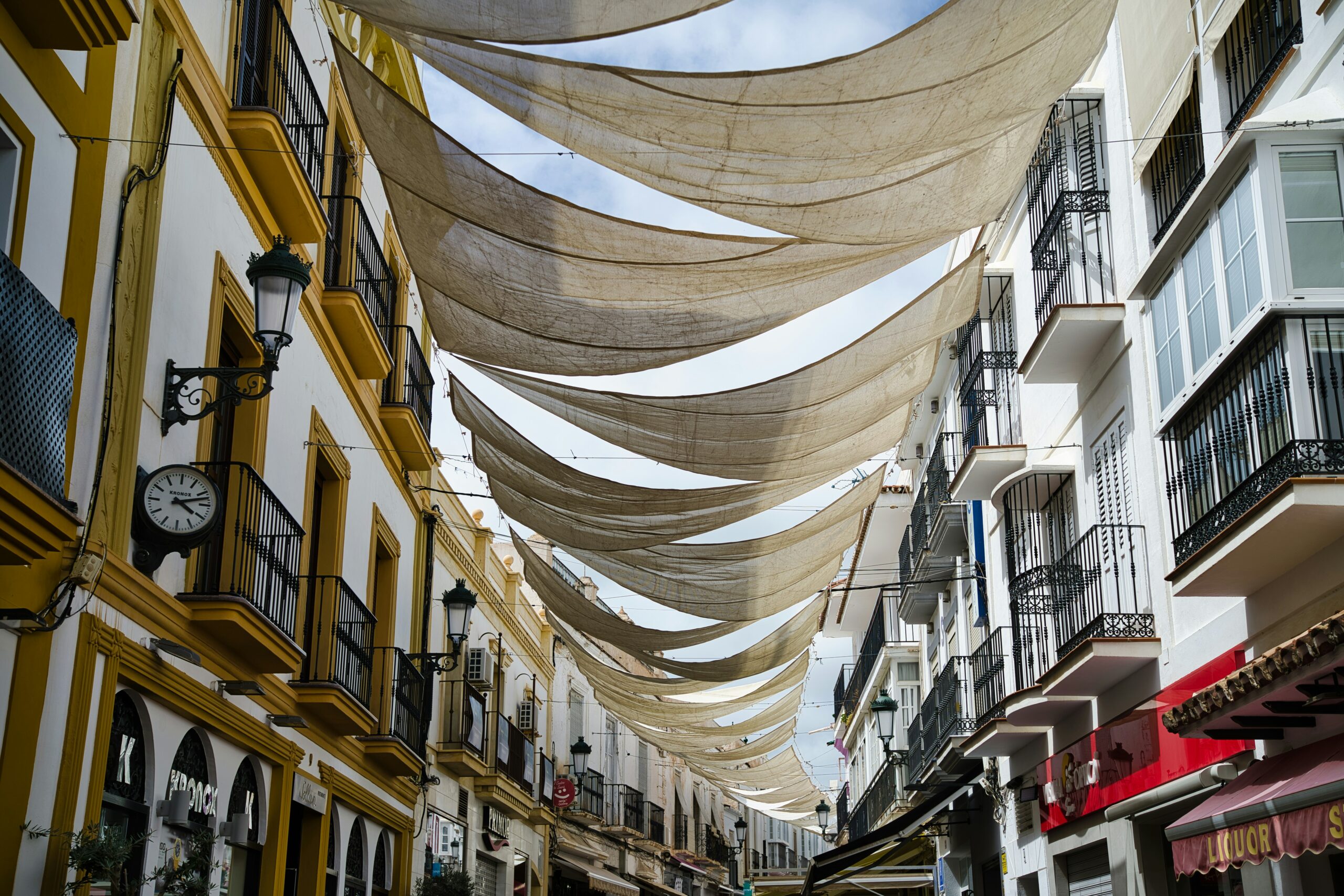
For most of us, air conditioning has become the obvious solution during heatwaves. However, while air conditioners may cool buildings effectively, they also release heat into the streets. Cities such as Seville are therefore combining building improvements with trees, fabric canopies and other forms of shade. As Paris-based urban-heat researcher Sophie Parison has explained,”Everything that requires energy releases heat, and that heat has to go somewhere.“
Across southern Europe, shade has long been an essential feature of urban design. In southern Spain, large shade sails are suspended above streets during the hottest months of the year, creating cooler public spaces while reducing direct exposure to the sun. External shutters and awnings, common in Mediterranean cities, are also simple yet effective ways of keeping buildings cooler by blocking sunlight before it reaches the windows.
Caring for the Most Vulnerable
Not all solutions to heatwaves require major infrastructure projects. Sometimes, the most effective response may simply be looking out for one another. Older adults are among the most vulnerable during periods of extreme heat, especially those living alone. In France, municipalities are required to maintain registers of older adults and people with health conditions. During heatwaves, they can check-in on them with welfare calls, allowing local authorities to make sure they are safe and identifying people who need additional help.
In Denmark, more than 1,700 volunteers take part in the DaneAge Association’s “telephone stars”, making welfare calls to older people living alone that can make a life-saving difference during extreme weather. This organization also encourages neighbours and relatives to check in on one another, help with shopping and remind vulnerable people to stay hydrated. Alongside greener streets and cooler buildings, human connections have already emerged as one of the most valuable resources of coping with extreme heat.