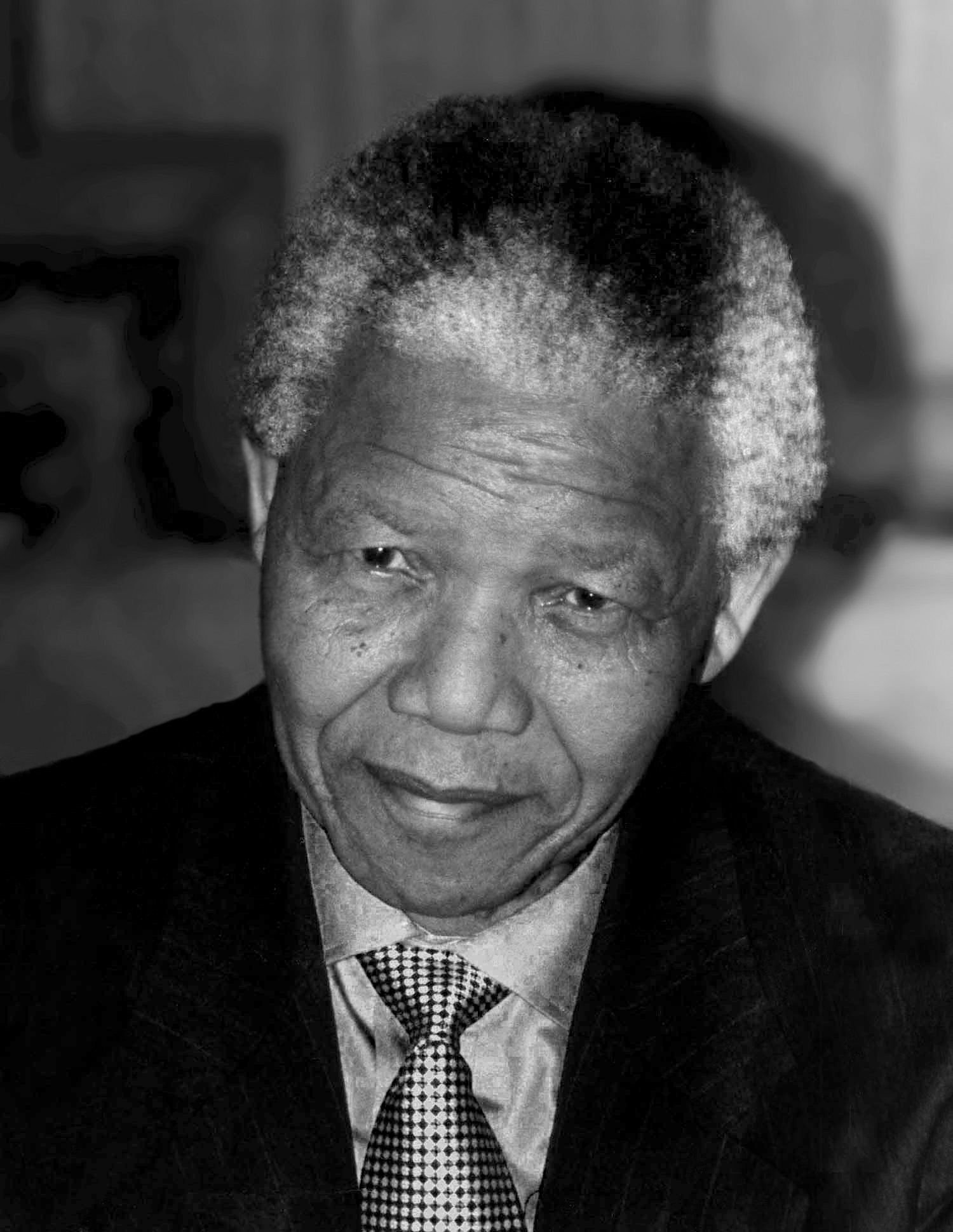
Nelson Mandela (1918-2013)
The Freedom That Could Not Be Taken
The story of Nelson Mandela is often told as a political triumph. It is also the story of a man who discovered that true freedom begins within.
A Light in the World shares portraits and testimonies that illuminate our time and become a source of reflection, wisdom and inspiration. Through their experiences and the perspectives they offer, these stories invite us to slow down, look deeper, and reconnect with the values that bring meaning, clarity, and direction to our lives. They do not claim to have all the answers, but they offer something equally valuable: a way of seeing that can transform how we understand ourselves, others, and how we experience the world around us.
When Nelson Mandela and seven co-defendants were sentenced to life imprisonment in 1964, South Africa’s apartheid government sought to silence one of its strongest voices for justice and equality. For 27 years, Mandela lived behind prison walls, separated from his family, deprived of his freedom, and subjected to a system designed to diminish his humanity.
Yet what was meant to break him became a place where his inner strength was forged.
Prison did not remove hardship from Mandela’s life. But it gave him the opportunity to cultivate something deeper: discipline, patience, and a profound understanding of human nature. He continued to study, to reflect, and to prepare himself for the role he would one day have to play.
He also made a remarkable choice. Rather than seeing his opponents only through the lens of hatred, he sought to understand them. He learned Afrikaans, the language that many of those who governed South Africa inherited from the settlers, because he believed that understanding another person was the first step toward meaningful dialogue. Even within prison, he treated guards with respect because he refused to allow injustice to change who he was, not because he accepted injustice, but because he refused to allow injustice to change who he was.
That refusal to let oppression dictate his character became central to his later leadership.
Freedom is often understood as the ability to move, to choose, and to live without restriction. Mandela revealed another dimension of freedom: the freedom to choose our response, the freedom to break the cycle of hatred, even when circumstances are beyond our control.
A person may lose external freedoms, but there remains an inner space where peace, values, dignity, and compassion can still be protected.
When Mandela walked out of prison on February 11, 1990, the world witnessed the release of its most famous political prisoner. But it also witnessed something much rarer: a man who had endured profound injustice without allowing bitterness to become his identity. Many expected anger. Instead, Mandela chose reconciliation.
This did not mean forgetting the suffering caused by apartheid, nor excusing those responsible. Mandela understood that justice required truth and accountability. But he also understood that a society cannot build a peaceful future if it remains trapped in the pain of the past.
As South Africa’s first Black president, he worked to unite a deeply divided nation. During his presidency, the Government of National Unity set up the Truth and Reconciliation Commission, paving the way to confront gross human rights abuses while promoting healing and preventing cycles of revenge.
His leadership transformed a country, but his legacy extends far beyond politics.
Mandela showed that courage is not only the ability to fight against injustice, but also the wisdom to choose what comes after the fight. He showed that strength is not measured by the power we hold over others, but by the mastery we have over ourselves and the power not to be subject to others’ opinions. And he showed that reconciliation is not weakness, but a refusal to let hatred determine the future.Perhaps this is why his life continues to inspire people across cultures and generations.
Every year on July 18th, Nelson Mandela International Day invites people around the world to dedicate 67 minutes to serving others, symbolizing the 67 years Mandela devoted to the pursuit of justice, equality, and human dignity. This year’s theme, “It’s still in your hands to combat poverty and inequity”, carries the same message that guided his life: a better world is not created only by extraordinary figures, but by countless people choosing to act with compassion and responsibility.
Mandela’s greatest legacy is not only that he helped lead South Africa out of apartheid. It is that he reminded humanity of a truth that remains timeless: our circumstances may shape our lives, but they do not have to define our soul. True freedom begins within.
It lives in the choices we make when no one is watching. In the values we refuse to abandon. In the compassion we preserve even in difficult circumstances. Nelson Mandela spent more than 27 years without physical freedom. Yet he never surrendered the freedom that mattered most. And through that freedom, he helped change the world.