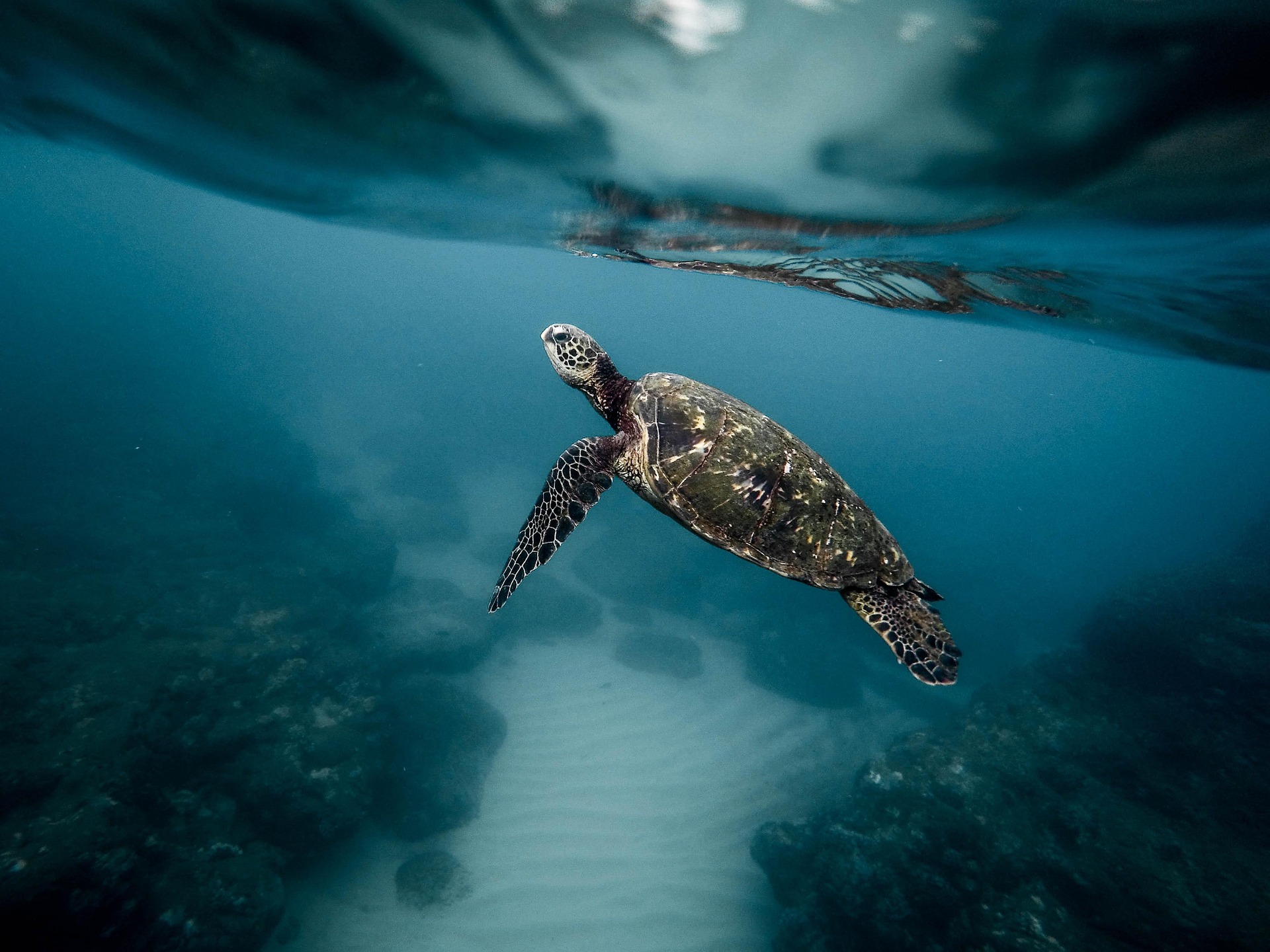
On June 8, 2026, World Oceans Day will be celebrated under the theme “Strong Marine Protected Areas for Our Blue Planet.” This theme reflects an encouraging reality: around the world, Marine Protected Areas (MPAs) are proving that it is possible to restore marine ecosystems while supporting the communities that depend on them.
For decades, news about the oceans has been dominated by stories of pollution, overfishing, and species decline. Yet a growing body of scientific research tells a more hopeful story. When marine ecosystems receive effective protection, nature has a remarkable capacity to recover. An international analysis published in the journal One Earth in 2023 documented 217 successful marine conservation initiatives worldwide, demonstrating that ocean decline can be reversed when governments, scientists, Indigenous people and local communities work together.
When Protection Brings Life Back
Marine Protected Areas are often described as “underwater national parks.” By limiting certain human activities, they allow ecosystems to regain their natural balance. According to the International Union for Conservation of Nature (IUCN), MPAs are among the most effective tools available for protecting marine biodiversity.
One of the most remarkable examples comes from French Polynesia. In June 2025, the territory announced the creation of the world’s largest marine protected area, covering nearly 5 million square kilometers. More than 1.1 million square kilometers will receive enhanced protection against destructive activities such as bottom trawling and deep-sea mining. More information is available through the Bertarelli Foundation – French Polynesia Marine Protection Program and the United Nations Environment Programme World Conservation Monitoring Centre (UNEP-WCMC).
In Greece, another landmark decision captured the attention of the scientific community. The country became the first in Europe to announce a ban on bottom trawling across all of its marine protected areas.
Science strongly supports these measures. A study published in Frontiers in Marine Science found that well-managed MPAs can increase fish biomass by more than 400% after several years of protection.
Local Communities Become Guardians of the Ocean
One of the most important lessons of modern conservation is that lasting protection cannot be imposed solely from government offices. The most successful initiatives are often those that actively involve local communities. Around the world, coastal populations are creating or co-managing their own protected marine areas.
In French Polynesia, several protected areas are inspired by the rāhui, an ancestral practice that temporarily closes fishing grounds to allow marine species to recover. This alliance between Indigenous knowledge and modern science has become a model increasingly studied by researchers.
In Canada, CPAWS (Canadian Parks and Wilderness Society) works alongside coastal communities and Indigenous Peoples to strengthen marine conservation efforts.
Globally, the Revive Our Ocean Initiative supports local communities in Greece, Mexico, the Philippines, and Indonesia in establishing new marine protected areas.
In Madagascar, the community-led network MIHARI (Locally Managed Marine Area Network Madagascar) brings together more than 200 coastal communities that manage their marine resources directly. Founded in 2012 and supported by Blue Ventures, this movement helps fishers and villages establish local marine reserves, temporary fishing closures, and ecosystem restoration programs. Today, MIHARI is recognized as one of the world’s largest community-led marine conservation networks, demonstrating that local people can become some of the ocean’s most effective stewards.
Technology Is Revolutionizing Ocean Protection
Technology is also transforming marine conservation.
The platform Global Fishing Watch uses satellite data and artificial intelligence to track vessels worldwide and detect illegal fishing activities.
Programs such as Copernicus Marine Service and NASA Earth Observatory now make it possible to monitor coral reefs, mangroves, and seagrass meadows from space. These technological advances are transforming the way scientists observe, understand, and protect marine ecosystems.
We explored the growing role of satellite technology in conservation in a recent article, Martin Wikelski: The Man Who Wants to Connect Nature to Space. The article examines how space-based monitoring and wildlife tracking are opening new possibilities for environmental research and biodiversity protection.
The organization OceanMind uses artificial intelligence to help authorities identify suspicious activity at sea, while Ocean Networks Canada operates underwater sensor networks capable of monitoring whales, orcas, and other marine species in real time.
Among the most fascinating projects is Project CETI, which uses artificial intelligence to study sperm whale communication. Another groundbreaking initiative, Allen Coral Atlas, maps coral reefs around the globe using advanced satellite imagery and machine learning.
Healthy Oceans, Thriving Communities
The benefits of marine protected areas extend far beyond conservation itself. Healthy oceans support food security, strengthen sustainable fisheries, protect coastlines from storms, and helps to combat climate change through coral reefs, mangroves, and seagrass ecosystems that store significant amounts of carbon.
Research also shows that fish populations increase within protected areas and create a spillover effect into surrounding fishing grounds, directly benefiting fishers and local economies.
A New Relationship Between Humanity and the Ocean
Beyond statistics and public policy, something deeper appears to be taking place.
With modernity and the industrial exploitation of natural resources, the ocean came to be viewed as an inexhaustible source of food, energy, and economic growth. Over the past century, advances in technology and industry have enabled unprecedented levels of extraction and exploration, often with little regard for ecological limits. Today, however, a growing awareness is taking hold. Millions of citizens, researchers, entrepreneurs, policymakers, and Indigenous communities recognize that our prosperity depends directly on the health of the marine ecosystems that sustain life on Earth.
The vast protected areas established in French Polynesia, the bold measures adopted in Greece, and community-led initiatives in Madagascar and around the world all point to a profound shift in perspective. As the examples presented in this article illustrate, a growing number of conservation initiatives are delivering measurable results. Together, they reflect a fundamental change in outlook: rather than viewing environmental degradation as inevitable, societies are increasingly recognizing that ecosystems can recover when given the opportunity. We are no longer focused solely on limiting damage. We are learning how to restore, regenerate, and collaborate with nature.
World Oceans Day 2026 reminds us of an essential truth: the future is not predetermined. Every new marine protected area, every restored reef, and every mobilized community demonstrates humanity’s ability to learn, adapt, and correct its course. More importantly, these efforts show that lasting progress comes not from dominating nature, but from learning to live in greater harmony with the ecosystems that sustain us.
Across the globe, awareness is growing. A culture of cooperation, responsibility, and respect for life is taking root. If the ocean is often a mirror of our world, then the waves of change rising today may signal one of the most inspiring transformations of our time: humanity rediscovering its rightful place within the great web of life. In an increasingly interconnected world, this emerging relationship with the ocean invites us to recognize a deeper truth – that the health of people, communities, and ecosystems is inseparable. It is a vision grounded not only in stewardship and resilience, but also in harmony and unity, with one another and with the living world that connects us all.